



Rare Disease Clinical Trials Market Overview
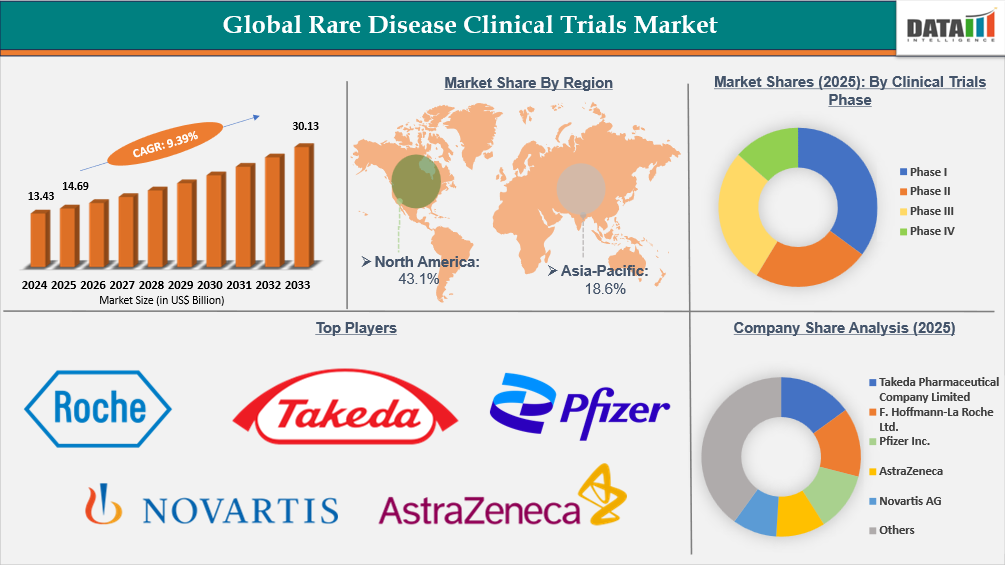
The global Rare Disease Clinical Trials Market reached US$13.43 Billion in 2024, rising to US$14.69 Billion in 2025 and is expected to reach US$30.13 Billion by 2033, growing at a CAGR of 9.39% from 2026 to 2033.
The Global Rare Disease Clinical Trials Market is a specialized segment of the clinical research industry focused on developing and evaluating novel treatments for rare diseases, which collectively affect a significant global patient population despite individually low disease prevalence. Rare diseases are defined in the United States as conditions affecting fewer than 200,000 individuals, with more than 7,000 rare diseases identified globally, many of which still lack approved treatment options, highlighting the urgent need for advanced clinical research and therapeutic innovation. The market is driven by increasing disease awareness, improvements in diagnostic technologies such as genomic and molecular testing, and growing investment in innovative therapies, including gene therapy, biologics, and precision medicine approaches.
The market is also supported by strong regulatory and funding initiatives, including orphan drug incentives, accelerated approval pathways, and government-supported research programs that encourage pharmaceutical and biotechnology investment. Clinical trials in this space are highly complex due to small and geographically dispersed patient populations, leading to increased adoption of adaptive trial designs, decentralized clinical trials, and biomarker-driven research methodologies. Overall, the market is expected to experience steady long-term growth, supported by technological advancements, collaborative research initiatives, and expanding rare disease therapeutic pipelines.
Rare Disease Clinical Trials Market Industry Trends and Strategic Insights
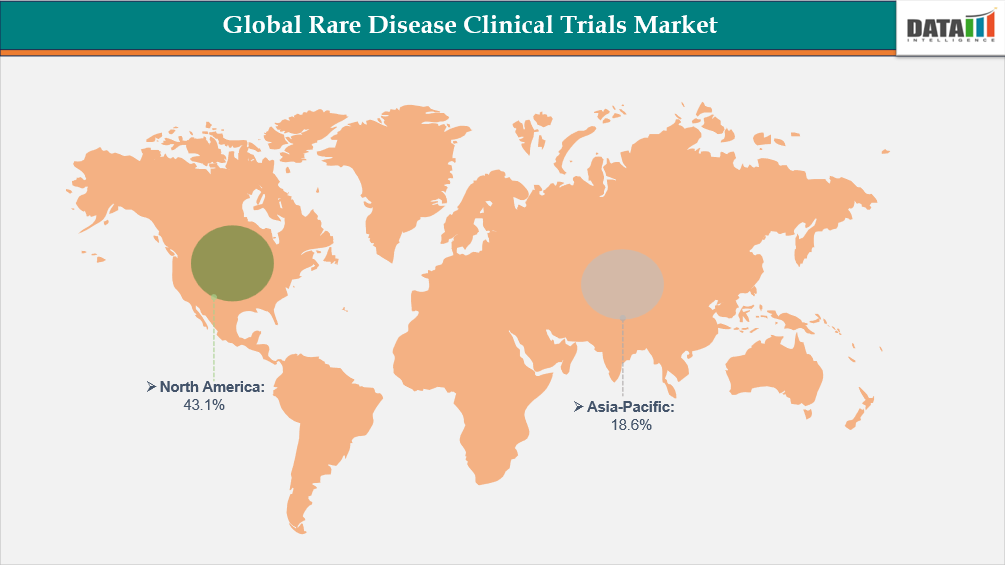
- North America leads the global rare disease clinical trials market, capturing the largest revenue share of 43.1% in 2025.
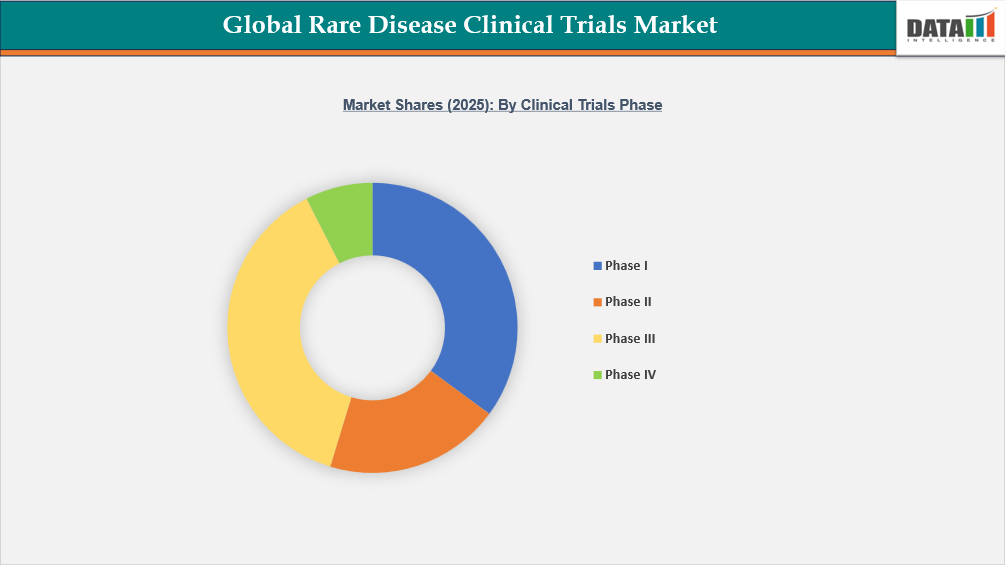
- By Clinical Trials Phase, Phase I led the global rare disease clinical trials market, capturing the largest revenue share of 35.1% in 2025.
Global Rare Disease Clinical Trials Market Size and Future Outlook
- 2025 Market Size: US$14.69 Billion
- 2033 Projected Market Size: US$30.13 Billion
- CAGR (2026–2033): 9.39%
- Dominating Market: North America
- Fastest Growing Market: Asia-Pacific
For More Detailed Information, Download Sample
Market Dynamics
Rising Prevalence and Improved Diagnosis of Rare Diseases Globally
The increasing global prevalence of rare diseases, along with advancements in genomic sequencing, molecular diagnostics, and newborn screening programs, is driving growth in rare disease clinical trials. Although each rare disease affects a small population individually, collectively, rare diseases impact a large patient population worldwide, creating significant unmet medical needs for innovative therapies. Improved diagnostic technologies are enabling earlier disease detection, improving trial enrollment efficiency, and supporting precision medicine-based therapeutic development.
Government and research initiatives are further strengthening this trend. For example, according to the U.S. National Institutes of Health (NIH), over 7,000 rare diseases have been identified globally, collectively affecting an estimated 300 million people worldwide, highlighting the urgent need for targeted clinical research and orphan drug development. Increased research funding, patient registry expansion, and orphan drug incentives are encouraging pharmaceutical and biotechnology investments in rare disease pipelines. The integration of biomarker-driven trial designs and adaptive clinical study models is further improving clinical development success rates and shortening development timelines.
Segmentation Analysis
The global rare disease clinical trials market is segmented based on clinical trials phase, therapeutic area, study design, sponsor, patient recruitment, innovation and region.
Dominance of Phase I Clinical Trials in the Rare Disease Market
Phase I trials account for 35.1% of the global rare disease clinical trials market because they represent the primary entry point for a large number of novel investigational therapies, particularly in gene therapy, biologics, and precision medicine-based treatments. Rare disease research is highly dependent on early-stage safety, tolerability, pharmacokinetic, and biological mechanism validation due to the complexity of rare conditions and the limited availability of patient populations. The high share of Phase I trials reflects strong investment from biotechnology companies, venture capital funding, and government research programs focused on innovative therapies.
Regulatory incentives such as orphan drug designations, breakthrough therapy pathways, and accelerated approval frameworks further encourage early clinical development. In addition, advancements in genomic sequencing, biomarker identification, and patient registry platforms are improving early patient detection and supporting first-in-human studies. Other phases, including Phase II, Phase III, and Phase IV, collectively support efficacy validation, regulatory approval, and post-marketing safety monitoring, but individually account for smaller shares compared to early-stage research activity.
Geographical Penetration
Largest Market:
Demand for Rare Disease Clinical Trials Market in North America
North America represents the largest market for rare disease clinical trials due to its strong pharmaceutical research infrastructure, high healthcare expenditure, and advanced clinical research ecosystem. The region has a high concentration of rare disease research programs supported by leading biopharmaceutical companies, academic research centers, and government funding initiatives.
The high demand for rare disease clinical trials in North America is also driven by advanced diagnostic capabilities, including genomic sequencing and biomarker-based patient identification, which improve early disease detection and trial enrollment efficiency. Additionally, strong regulatory incentives such as orphan drug designations, breakthrough therapy pathways, and accelerated approval programs encourage pharmaceutical companies to invest in rare disease research. The widespread adoption of precision medicine, decentralized clinical trial models, and patient registry databases further supports clinical trial execution in the region.
U.S. Rare Disease Clinical Trials Market Outlook
The U.S. Rare Disease Clinical Trials Market is expected to experience strong and sustained growth due to the country’s advanced healthcare infrastructure, high research and development investment, and strong presence of leading biopharmaceutical and biotechnology companies. According to the National Institutes of Health (NIH), more than 7,000 rare diseases have been identified globally, many of which still lack approved treatment options, creating significant demand for clinical research and therapeutic innovation.
The market is further supported by favorable regulatory frameworks, including orphan drug incentives, breakthrough therapy designations, and accelerated approval pathways from the U.S. FDA, which encourage pharmaceutical companies to invest in rare disease pipelines. Recent regulatory initiatives, such as the FDA’s Plausible Mechanism Framework (2026), are also expected to accelerate the development of individualized and ultra-rare disease therapies. The increasing adoption of precision medicine, gene therapy research, and decentralized clinical trial models is improving trial efficiency and patient access, supporting long-term market expansion in the United States.
Canada Rare Disease Clinical Trials Market Trends
The Canadian rare disease clinical trials market is growing steadily due to strong government support, advanced healthcare infrastructure, and increasing participation in global clinical research programs. Canada benefits from initiatives led by Health Canada and funding support from the Canadian Institutes of Health Research (CIHR), which promote rare disease research and orphan drug development. Advancements in genomic medicine, precision diagnostics, and patient registry networks are improving early disease detection and supporting targeted therapy trials. Additionally, the adoption of decentralized clinical trials, telemedicine-based patient monitoring, and international research collaborations is helping overcome patient recruitment challenges associated with rare diseases. Overall, Canada is emerging as an important regional contributor to global rare disease clinical research.
Fastest Growing Market:
Asia-Pacific Records the Fastest Growth in the Rare Disease Clinical Trials Market
The Asia-Pacific region is emerging as the fastest-growing market for rare disease clinical trials, driven by expanding healthcare infrastructure, large and increasingly well-characterized patient populations, and supportive regulatory reforms. Countries such as China, Japan, India, and South Korea are strengthening clinical research ecosystems through regulatory modernization, increased public and private investment in biopharmaceutical R&D, and the development of rare disease-focused patient registries and genomic databases. Enhanced diagnostic capabilities and increased awareness of rare diseases are enabling earlier identification of patients, which supports higher trial enrollment and broader study participation across diverse indications.
Regulatory bodies in the region are increasingly aligning with global standards to streamline clinical trial approvals, offer accelerated pathways, and provide incentives for orphan drug development, making Asia-Pacific an attractive destination for global sponsors. Additionally, lower cost structures and growing CRO capabilities are supporting efficient trial execution, particularly for multi-center and decentralized studies. Collaborative efforts between governments, research institutions, and industry players are further enhancing clinical research capacity.
India Rare Disease Clinical Trials Market Insights
India’s rare disease clinical trials market is growing due to increasing awareness, improving diagnostic capabilities, and expanding clinical research infrastructure. Epidemiological data for rare diseases in India is collated by the National Registry for Rare Diseases, maintained by the Indian Council of Medical Research (ICMR), which recorded 4,001 different rare diseases by 31 October 2021, reflecting the significant disease burden and need for advanced therapeutic research. Regulatory reforms by the Central Drugs Standard Control Organization (CDSCO), along with growing adoption of genomic sequencing, molecular diagnostics, and telemedicine-based patient monitoring, are supporting clinical trial expansion across urban and rural regions. The increasing involvement of domestic and global pharmaceutical sponsors, along with CROs, is strengthening the clinical research ecosystem. However, challenges such as limited disease awareness, delayed diagnosis, and healthcare infrastructure disparities still exist, though rising investment in rare disease research is expected to drive long-term market growth.
China Rare Disease Clinical Trials Market Industry Growth
China’s rare disease clinical trials market is witnessing strong growth driven by rising research and development investment, expansion of clinical research infrastructure, and increasing participation from domestic and international pharmaceutical and biotechnology companies. China has registered around 780,000 rare disease cases in its national diagnosis and treatment system, reflecting the large patient base and significant unmet medical need that is encouraging clinical trial activity across multiple rare disease indications. The country’s growing focus on innovative biologics, gene therapies, and precision medicine is further accelerating rare disease drug development programs and early-stage clinical research initiatives.
In addition, advancements in genomic sequencing, molecular diagnostics, and digital healthcare technologies are improving early disease detection and supporting more efficient patient recruitment for clinical trials. Growing healthcare awareness, rising government support for medical innovation through healthcare modernization programs, and improved research capabilities across academic and hospital networks are expected to continue driving long-term market growth in China’s rare disease clinical trials sector.
Competitive Landscape
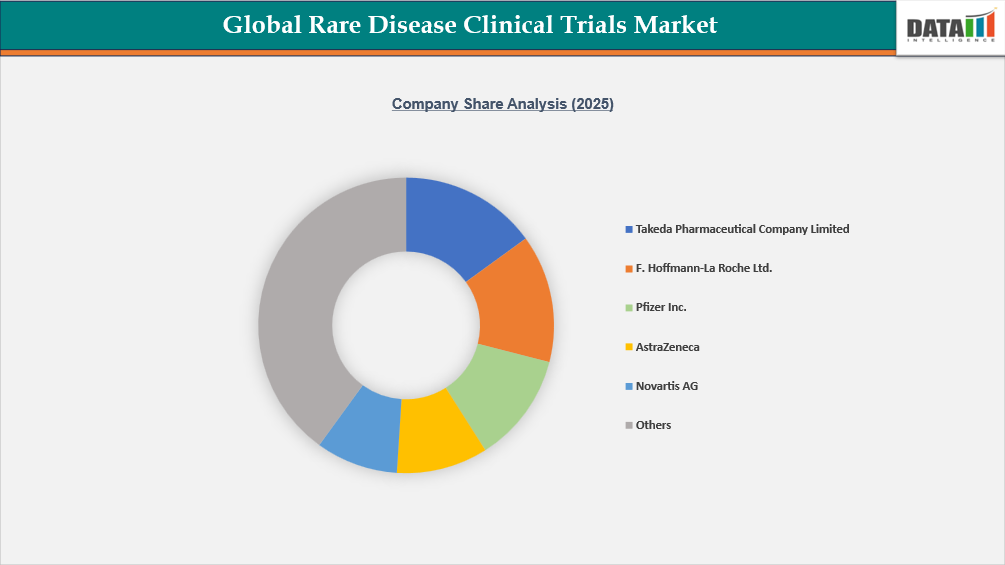
The global rare disease clinical trials market is highly competitive and is led by major pharmaceutical innovators and global contract research organizations (CROs) that focus on accelerating rare disease drug development through advanced science, strategic collaborations, and patient-centric trial models. Companies such as Takeda Pharmaceutical Company Limited, F. Hoffmann-La Roche Ltd, Pfizer Inc., AstraZeneca, and Novartis AG dominate the pharmaceutical segment with strong rare disease pipelines spanning gene therapies, biologics, and precision medicine-based research programs.
CRO and clinical service providers, including Labcorp, IQVIA, ICON plc, Parexel International (MA) Corporation, and Syneos Health, strengthen the market by providing specialized clinical trial management, data analytics, regulatory consulting, and patient recruitment solutions for complex rare disease studies. Competitive advantage in this market is largely driven by investment in innovative therapeutic modalities, global clinical trial networks, strategic partnerships, and adoption of advanced technologies to improve patient identification, trial enrollment, and study efficiency in small patient populations.
Key Developments
- In January 2026, Takeda Pharmaceutical Company Limited and Protagonist Therapeutics announced the submission of a New Drug Application (NDA) to the U.S. FDA in 2026 for Rusfertide, a first-in-class hepcidin mimetic for the treatment of polycythemia vera, based on positive Phase 3 verify trial results demonstrating durable hematocrit control and reduced phlebotomy dependence. The development highlights growing innovation in rare blood disorder therapies and strengthens Takeda’s global rare disease pipeline through strategic collaboration.
- In February 2026, the U.S. FDA issued draft guidance in 2026 introducing the “Plausible Mechanism Framework” to accelerate development and regulatory approval of individualized therapies for ultra-rare diseases, particularly genome editing and RNA-based treatments. The framework supports small-sample clinical evidence generation by focusing on demonstrating biological mechanisms, target validation, and real-world biomarker or clinical outcome improvements when randomized controlled trials are not feasible. This regulatory advancement is expected to accelerate innovation in personalized rare disease therapies and expand access to targeted treatments for ultra-rare patient populations.
What Sets This Global Rare Disease Clinical Trials Market Intelligence Report Apart
- Latest Data & Forecasts – Comprehensive and up-to-date market intelligence with forecasts through 2033, covering global demand based on clinical trial phase, therapeutic area, study design, sponsor type, patient recruitment models, innovation adoption, and regional performance across North America, Europe, Asia-Pacific, Latin America, and the Middle East & Africa.
- Regulatory Intelligence – In-depth assessment of global regulatory frameworks impacting rare disease clinical trial development and commercialization, including FDA, EMA, NMPA, PMDA, and CDSCO trial approval pathways, ethical guidelines, patient safety requirements, and post-trial surveillance standards.
- Competitive Benchmarking – Structured benchmarking of leading pharmaceutical companies, biotech innovators, and CROs based on clinical pipeline strength, trial success rates, geographic trial footprint, strategic partnerships, and investment in rare disease research.
- Geographic & Emerging Market Coverage – Regional analysis highlighting rare disease burden, patient recruitment potential, healthcare infrastructure, reimbursement environments, and clinical research access, with special focus on high-growth opportunities in Asia-Pacific, Latin America, and Middle East & Africa.
- Actionable Strategies & Cost Dynamics – Strategic insights into patient-centric trial design, gene and cell therapy development, decentralized trial models, pricing and funding dynamics, and operational cost structures, supported by industry expert perspectives from clinical researchers, regulatory advisors, and biopharma executives.

