


Radioligand Therapy Market Size
Precision oncology is increasingly moving toward therapies that can identify, target and treat cancer cells with greater specificity. Radioligand therapy is gaining commercial importance because it combines targeted molecules with radioactive isotopes to deliver radiation directly to tumor cells while limiting damage to surrounding healthy tissue. This makes the treatment especially relevant for advanced prostate cancer, neuroendocrine tumors and future oncology indications where conventional treatment options remain limited.
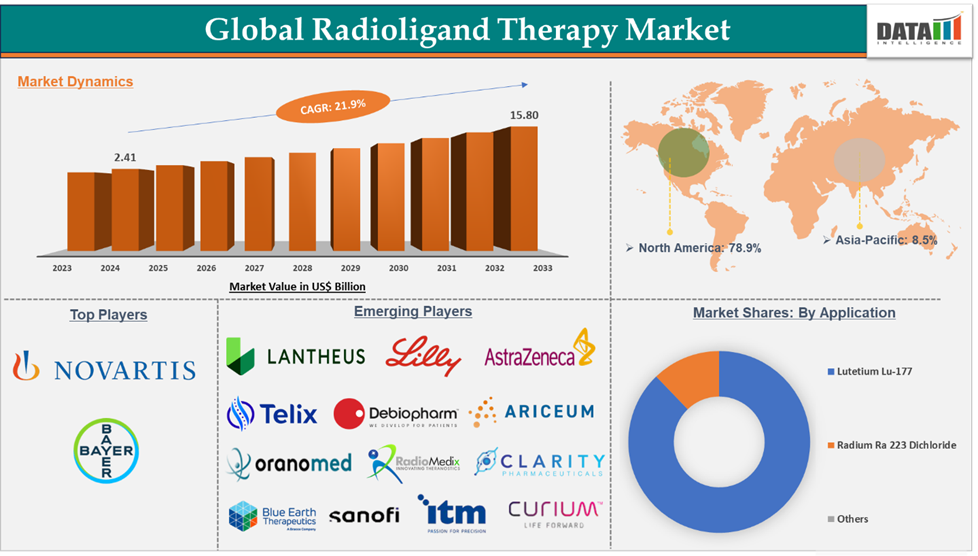
Radioligand Therapy Market is valued at US$ 2.94 billion in 2025 and is projected to reach US$ 21.30 billion by 2035, growing at a CAGR of 21.9% during 2026–2035.
The market matters now because radioligand therapy is shifting from a niche nuclear medicine category into a strategic oncology platform. Rising cancer prevalence, strong uptake of Lu-177 therapies, growing theranostics adoption, and expanding investment by pharmaceutical and radiopharmaceutical companies are increasing buyer interest. For hospitals, oncology centers and nuclear medicine facilities, investment timing is linked to patient access, radiopharmaceutical supply, imaging infrastructure, reimbursement readiness and treatment capacity.
For more details on this report – Request for Sample
Radioligand Therapy Market Key Takeaways
- The Radioligand Therapy Market 2026 value is recalculated at US$3.58 billion, reflecting strong early adoption of targeted radiopharmaceutical oncology therapies.
- The Radioligand Therapy Market 2035 value is projected at US$21.30 billion, supported by a 21.9% CAGR through the fixed forecast period.
- Lutetium Lu 177 accounted for 87.8% of the Radioligand Therapy Market Share in 2024, supported by approved therapies such as Pluvicto and Lutathera.
- North America dominated the market with 78.9% share in 2024, driven largely by strong U.S. uptake of Pluvicto and Lutathera.
- Pluvicto generated US$1.39 billion globally in 2024, with US$1.16 billion from the U.S., while Lutathera generated US$724.00 million globally, with US$513.00 million from the U.S.
- High therapy cost is a major adoption barrier, with Pluvicto costing up to US$50,000 and Lutathera up to US$62,000 according to the source data.
- Next-generation development is increasingly focused on theranostics, Actinium-225 alpha emitters, AI-driven treatment planning and broader oncology applications.
Radioligand Therapy Market Scope
| Report Attribute | Details |
| Market Size in 2025 | US$2.94 billion |
| Market Size by 2035 | US$21.30 billion |
| CAGR | 21.9% |
| Historic Years | 2023-2024 |
| Base Year | 2025 |
| Forecast Period | 2026-2035 |
| Segments Covered | Type, Target, Application and Region |
| Leading Region | North America |
| Fastest Growing Region | Asia-Pacific |
Radioligand Therapy Market Clinical Demand and Market Dynamics
Cancer Incidence Is Expanding the Treatable Population
The rising incidence and prevalence of cancer remain the core growth driver for the Radioligand Therapy Market. Prostate cancer is one of the most important demand anchors. GLOBOCAN projections in the source data indicate prostate cancer accounted for nearly 1.5 million cases in 2022, with cases expected to reach 1.6 million in 2025 and 1.8 million in 2030.
Radioligand therapy has gained traction because it addresses advanced-stage cancer populations where targeted treatment options are needed. It is already used in prostate cancer and neuroendocrine tumors, and the expansion of RLT applications to other cancers is a key opportunity through 2035. The business relevance is clear: as the eligible patient pool expands, demand increases for radiopharmaceutical manufacturing, isotope supply, nuclear medicine capacity, imaging-linked treatment pathways and oncology center readiness.
Theranostics Is Strengthening the Precision Oncology Model
Theranostics is becoming central to radioligand therapy adoption. The model combines diagnostic imaging and targeted treatment, helping clinicians identify patients likely to benefit from specific radiopharmaceutical therapy. This improves treatment selection and supports more personalized oncology workflows.
In January 2026, advancements in theranostics and precision oncology enabled radioligand therapies to combine diagnostic imaging and targeted treatment, improving treatment accuracy and patient outcomes. For pharmaceutical companies and healthcare providers, this creates a differentiated oncology model where diagnosis, patient stratification and therapy delivery are commercially connected.
Clinical Success of Lu-177 Therapies Supports Market Confidence
Approved Lu-177 therapies have created the commercial foundation for the market. Lutathera and Pluvicto have demonstrated strong adoption in neuroendocrine tumors and prostate cancer respectively. In November 2025, the increasing clinical success of Lu-177 therapies such as Lutathera and Pluvicto boosted adoption by demonstrating targeted tumor destruction with limited damage to healthy tissues.
The commercial strength of these therapies is visible in 2024 sales. Pluvicto generated US$1.39 billion globally, while Lutathera generated US$724.00 million globally. Combined, these two Lu-177 therapies generated approximately US$2.12 billion in 2024, closely aligning with the dominance of the Lu-177 segment.
High Cost Can Slow Patient Access
The high cost of radioligand therapies remains one of the most important restraints. Pluvicto can cost up to US$50,000, while Lutathera can cost up to US$62,000. These price points create significant affordability challenges for patients with partial or no insurance coverage.
The challenge is sharper in low-income and emerging markets where reimbursement pathways are limited. Even where clinical need is high, adoption can remain constrained if payer coverage, nuclear medicine access and hospital infrastructure do not scale together. For companies, pricing strategy, patient access programs and reimbursement evidence will be as important as clinical differentiation.
Radioligand Therapy Market Opportunities
Radioligand therapy offers strong opportunities for pharmaceutical companies, radiopharmaceutical manufacturers, isotope suppliers, nuclear medicine centers, oncology hospital networks and investors. The most immediate opportunity remains prostate cancer and neuroendocrine tumors, where approved products have already demonstrated commercial traction.
The larger opportunity through 2035 is indication expansion. As RLT applications move into additional cancer types, companies with strong pipelines, isotope access, clinical trial capabilities and manufacturing infrastructure will be better placed to capture future demand. Emerging development around Actinium-225 also creates a next-generation therapy opportunity, particularly for resistant and advanced-stage cancers.
Hospitals and oncology centers have an opportunity to build differentiated cancer care capacity by investing in nuclear medicine facilities, imaging infrastructure and treatment administration capabilities. Procurement teams will need to evaluate radiopharmaceutical supply reliability, handling requirements, clinical workflow capacity and reimbursement coverage before scaling treatment programs.
Radioligand Therapy Market Economic and Investment Analysis
The Radioligand Therapy Market Growth is supported by rising oncology spending, increasing healthcare investment, expansion of nuclear medicine facilities and strong pharmaceutical interest in precision oncology. Leading companies are investing in radiopharmaceutical development, manufacturing infrastructure and clinical pipelines, indicating confidence in long-term demand.
Capital expenditure is required across the value chain. Manufacturing investments are needed for radiopharmaceutical production and isotope-related supply. Hospitals require nuclear medicine infrastructure, trained specialists, imaging capacity and safety systems. Investors are likely to focus on companies with scalable manufacturing, differentiated targets, strong clinical programs and access to high-value oncology markets.
The ROI outlook is attractive in markets with reimbursement support and high treatment adoption, particularly the U.S. However, profitability can be affected by isotope supply complexity, manufacturing constraints, high logistics requirements, regulatory oversight and pricing pressure. Scenario risk is highest in emerging markets where patient affordability and reimbursement access remain limited.
Radioligand Therapy Market Segmentation Analysis
The Radioligand Therapy Market Report is segmented by Type, by Target, by Application, and by Region - Share, Trends, and Forecast to 2035.
Lutetium Lu 177 Holds the Leading Type Position
Lutetium Lu 177 accounted for 87.8% of the global Radioligand Therapy Market Share in 2024. Based on the recalculated 2024 market value, this represents approximately US$2.12 billion. The segment’s dominance is supported by approved therapies such as Pluvicto and Lutathera, both developed and manufactured by Novartis AG.
Lu-177 is widely used because it delivers targeted radiation to cancer cells while limiting exposure to healthy tissue. It is commercially important in prostate cancer and neuroendocrine tumors, where current product uptake has already established clear demand. The segment is likely to remain central to market growth through 2035, although alpha emitters may gradually increase competitive pressure.
Alpha Emitters Are Building the Next Development Wave
Alpha emitters such as Actinium-225 are gaining attention as next-generation radioligand therapy platforms. In October 2025, rising focus on Actinium-225 accelerated next-generation therapy development, offering higher potency and improved efficacy potential for resistant and advanced-stage cancers.
For investors and pharmaceutical companies, alpha emitters represent a pipeline opportunity rather than a fully mature commercial category in the source content. Their future growth will depend on clinical success, manufacturing scalability, safety profile, isotope availability and regulatory approvals.
Prostate Cancer and Neuroendocrine Tumors Remain Core Applications
Radioligand therapy is currently most commercially established in prostate cancer and neuroendocrine tumors. Prostate cancer is especially important because of its large and growing patient population. Neuroendocrine tumors remain important due to Lutathera’s commercial performance and established clinical use.
The future market opportunity depends on expanding RLT to other prevalent cancers. This expansion could increase addressable patient populations and create new product categories, but it will require strong clinical evidence, treatment-center capacity and reimbursement pathways.
Radioligand Therapy Market Regional Analysis
North America Leads Due to U.S. Adoption and Revenue Concentration in Radioligand Therapy Market
North America dominated the radioligand therapy market with 78.9% share in 2024. Based on the recalculated 2024 market value, North America represented approximately US$1.90 billion. The U.S. is the region’s most important growth engine because of advanced healthcare infrastructure, strong oncology adoption, reimbursement support and high revenue contribution from approved therapies.
In 2024, Pluvicto generated US$1.39 billion globally, of which US$1.16 billion, or 83%, came from the U.S. Lutathera generated US$724.00 million globally, with US$513.00 million, or 71%, from the U.S. These figures show that U.S. clinical adoption and market access remain central to global revenue generation.
Canada also benefits from advanced healthcare infrastructure and oncology treatment capabilities, although country-level revenue values are not provided in the source content. The region’s future growth will depend on treatment capacity, nuclear medicine expansion, reimbursement stability and broader indication approvals.
Europe Is Positioned Around Nuclear Medicine Expertise and Radiopharmaceutical Development
Europe is an important region for radioligand therapy because of established nuclear medicine expertise, oncology research activity and the presence of radiopharmaceutical developers. Germany is specifically highlighted in the source as one of the key regions where healthcare investment, expansion of nuclear medicine facilities and regulatory support are strengthening market growth.
European market expansion is likely to depend on reimbursement decisions, hospital readiness and cross-country differences in oncology funding. Companies operating in Europe must navigate national market access pathways and ensure reliable radiopharmaceutical distribution across regulated healthcare systems.
Asia-Pacific Offers High Long-Term Growth Potential in Radioligand Therapy Market
Asia-Pacific is expected to be the fastest-growing region for radioligand therapy. Growth is supported by rising cancer prevalence, healthcare investments, expanding nuclear medicine facilities and increasing interest in targeted oncology treatments. The source highlights China, India and Japan as key countries where investment, nuclear medicine expansion and regulatory support are contributing to market growth.
India presents a strong clinical need due to rising prostate cancer cases, which are expected to account for 41,700 cases in 2025 according to the source data. However, affordability remains a major barrier. China and Japan offer future potential as healthcare systems expand precision oncology and nuclear medicine capabilities. Country-level market size values are not provided, but Asia-Pacific’s opportunity is linked to patient volume, infrastructure development and access expansion.
Radioligand Therapy Market Country-Level Market Analysis
The United States is the most important country market based on disclosed product revenue. Its leadership is supported by high adoption of Pluvicto and Lutathera, strong oncology infrastructure and reimbursement capacity. Future growth will depend on broader indications, nuclear medicine center capacity and sustained payer support.
Germany is relevant in Europe due to healthcare investment, nuclear medicine expansion and regulatory support noted in the source. Japan offers potential due to advanced healthcare infrastructure and interest in precision oncology. China and India provide large patient populations and long-term growth potential, but infrastructure, affordability and reimbursement limitations may affect adoption pace.
Country-specific challenges include therapy cost, uneven access to nuclear medicine facilities, radiopharmaceutical logistics and regulatory approval timelines. Future opportunities are strongest where cancer burden, hospital investment and reimbursement frameworks align.
Radioligand Therapy Market Regulatory and Policy Analysis
Radioligand therapy is regulated as a specialized oncology and radiopharmaceutical treatment category. Market development is influenced by drug approval pathways, radiation safety standards, nuclear medicine facility requirements, isotope handling rules, manufacturing quality standards and reimbursement policies.
Regulatory support across key countries including the United States, Germany, China, India and Japan was identified in September 2025 as a contributor to market growth. Healthcare investment and nuclear medicine facility expansion are also supporting adoption. However, regulatory complexity can extend commercialization timelines because radioligand therapies require coordination across clinical oncology, radiopharmacy, nuclear medicine and radiation safety systems.
Future regulatory changes are expected to focus on precision oncology validation, radiopharmaceutical manufacturing quality, patient safety and treatment administration standards. Companies that can combine clinical evidence with scalable and compliant manufacturing will be better positioned.
Radioligand Therapy Market Competitive Landscape
The radioligand therapy market is concentrated around approved product leaders and a growing group of emerging radiopharmaceutical companies. Novartis AG and Bayer AG are the major established players in the source content. Novartis is especially well positioned through Pluvicto and Lutathera, which together generated approximately US$2.12 billion in 2024.
Emerging and expanding players include Eli Lilly and Company, Lantheus, Curium, AstraZeneca, ITM Isotope Technologies Munich SE, Telix Pharmaceuticals Limited, Oranomed, Sanofi, RadioMedix, Clarity Pharmaceuticals, Ariceum Therapeutics and Blue Earth Therapeutics. These companies are competing across targets, isotopes, pipelines, manufacturing capabilities and diagnostic-therapeutic integration.
Competitive differentiation will depend on target specificity, isotope strategy, clinical evidence, manufacturing scale, supply reliability, regulatory execution and payer acceptance. Companies that control or secure radiopharmaceutical supply chains and build strong theranostic platforms will have a stronger strategic position than companies relying only on single-asset development.
Recent Developments in Radioligand Therapy Market
- June 2026 – Eli Lilly expands radioligand therapy pipeline through targeted oncology development
Eli Lilly advanced its radiopharmaceutical oncology strategy by expanding clinical development of targeted radioligand therapies and strengthening manufacturing capabilities to support precision cancer treatment programs. - June 2026 – Telix Pharmaceuticals strengthens radioligand therapy manufacturing network
Telix Pharmaceuticals expanded its radiopharmaceutical manufacturing and commercial infrastructure to support the development and global supply of targeted radioligand therapies for prostate cancer and other solid tumors. - May 2026 – Lantheus advances targeted radiopharmaceutical oncology portfolio
Lantheus expanded its radioligand therapy portfolio through continued clinical development, manufacturing investments, and strategic collaborations focused on precision oncology and theranostic applications. - May 2026 – ITM Isotope Technologies Munich advances targeted radionuclide therapies
ITM strengthened its radiopharmaceutical pipeline by advancing clinical-stage radioligand therapy candidates and expanding isotope production capabilities to support global oncology programs. - April 2026 – AstraZeneca expands precision oncology through radioconjugate development
AstraZeneca continued strengthening its radioligand therapy strategy by advancing targeted radioconjugate programs and expanding collaborations focused on precision cancer therapeutics. - March 2026 – Curium expands radiopharmaceutical manufacturing capabilities
Curium enhanced its production network for diagnostic and therapeutic radioisotopes, supporting the growing commercialization of radioligand therapies and theranostic oncology products. - February 2026 – Clarity Pharmaceuticals advances targeted radiopharmaceutical clinical programs
Clarity Pharmaceuticals expanded clinical development of copper-based radiopharmaceuticals and strengthened manufacturing capabilities to accelerate precision radioligand therapy for solid tumors.
Strategic Insights and Analyst Perspective
Radioligand therapy is becoming a strategic oncology platform because it connects diagnostics, targeted treatment and personalized cancer care. For pharmaceutical companies, the key opportunity is to expand beyond currently approved indications while building supply chain control and manufacturing capacity. For hospitals, the key decision is whether to invest early in nuclear medicine infrastructure and treatment workflow readiness.
Investors should monitor Lu-177 revenue momentum, alpha emitter development, theranostics platforms, isotope availability and clinical pipeline progress. Procurement teams should assess total treatment cost, reimbursement support, facility readiness, patient throughput and radiopharmaceutical supply reliability.
Risk mitigation is essential. High therapy costs, reimbursement gaps, complex logistics and limited nuclear medicine infrastructure can slow adoption. Market participants that address access, affordability, production scale and clinical evidence together will be better positioned through 2035.
Report Benefits
This Radioligand Therapy Market Report helps pharmaceutical companies evaluate growth opportunities by isotope type, cancer indication and regional adoption. Investors can use it to assess pipeline potential, market access risks and competitive positioning. Hospitals and oncology centers can understand infrastructure needs, treatment capacity requirements and adoption barriers. Suppliers and radiopharmaceutical manufacturers can identify opportunities in isotope production, radiopharmacy services, logistics and nuclear medicine support. Strategy teams can benchmark leading companies, regional demand and therapy commercialization timing.
Target Audience
- Pharmaceutical companies
- Radiopharmaceutical developers
- Oncology centers
- Nuclear medicine departments
- Hospital networks
- Medical isotope suppliers
- Radiopharmacy operators
- Diagnostic imaging companies
- Healthcare investors
- Private equity firms
- Venture capital firms
- Clinical development teams
- Reimbursement specialists
- Procurement heads
- Regulatory consultants
- Corporate strategy teams




























































