



Japan Pharmaceutical Distribution Service Market Overview
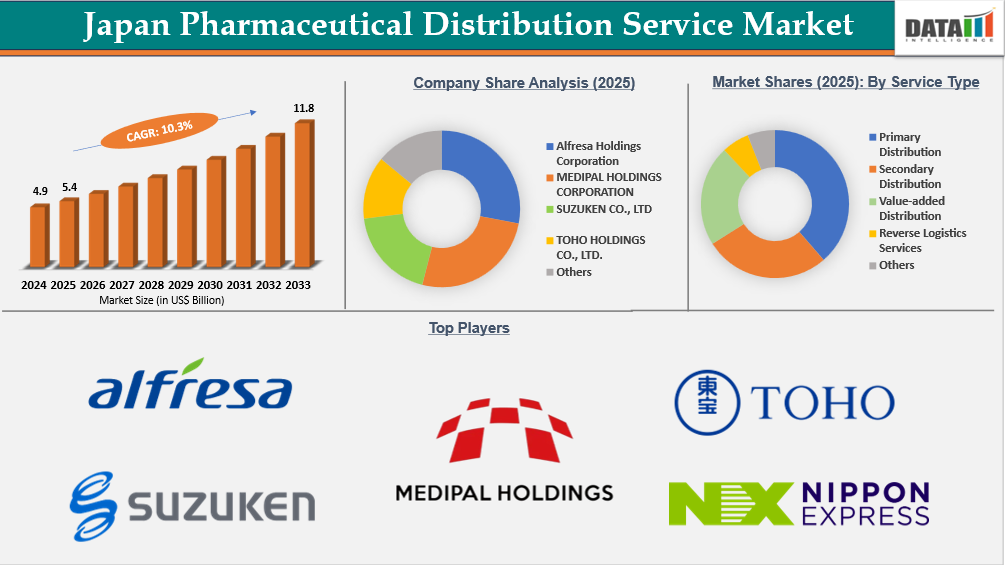
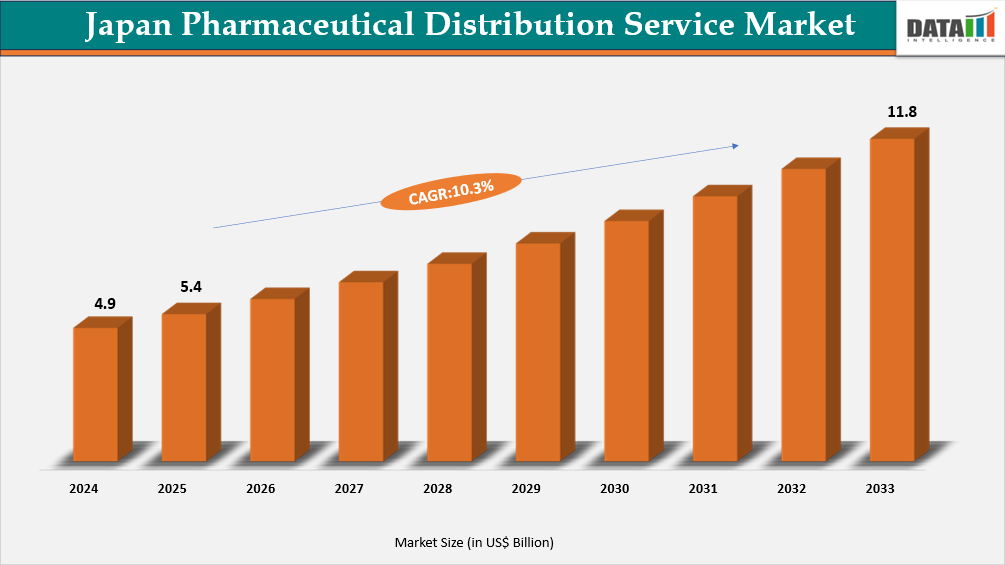
The Japan pharmaceutical distribution service market reached US$4.9 Billion in 2024, rising to US$5.4 Billion in 2025 and is expected to reach US$11.8 Billion by 2033, growing at a CAGR of 10.3% from 2026 to 2033.
The growth of the Japan pharmaceutical distribution service market is primarily driven by strong hospital procurement demand and increasing outsourcing of logistics activities to specialized distribution service providers to improve efficiency and regulatory compliance. The market is further supported by the high utilization of injectable and specialty medicines, particularly in oncology and critical care, which require advanced distribution capabilities and strict temperature-controlled supply chains. The pharmaceutical distribution service market is also benefiting from the widespread adoption of generic medicines, which accounted for around 89% of prescription volume in 2025, supporting high-volume pharmaceutical distribution channels. In addition, Japan’s aging population, where nearly 29% of the population is aged 65 years and above, is significantly increasing demand for continuous medication supply for chronic diseases, cardiovascular disorders, and oncology treatments. With more than 1 million new cancer cases reported annually, demand for hospital-administered therapies, particularly sterile injectable drugs, continues to strengthen the pharmaceutical distribution service market. These demographic trends, combined with advanced healthcare infrastructure, strong domestic pharmaceutical manufacturing, and stable reimbursement policies, are expected to sustain long-term expansion of the pharmaceutical distribution service market in Japan.
Pharmaceutical Distribution Service Industry Trends and Strategic Insights
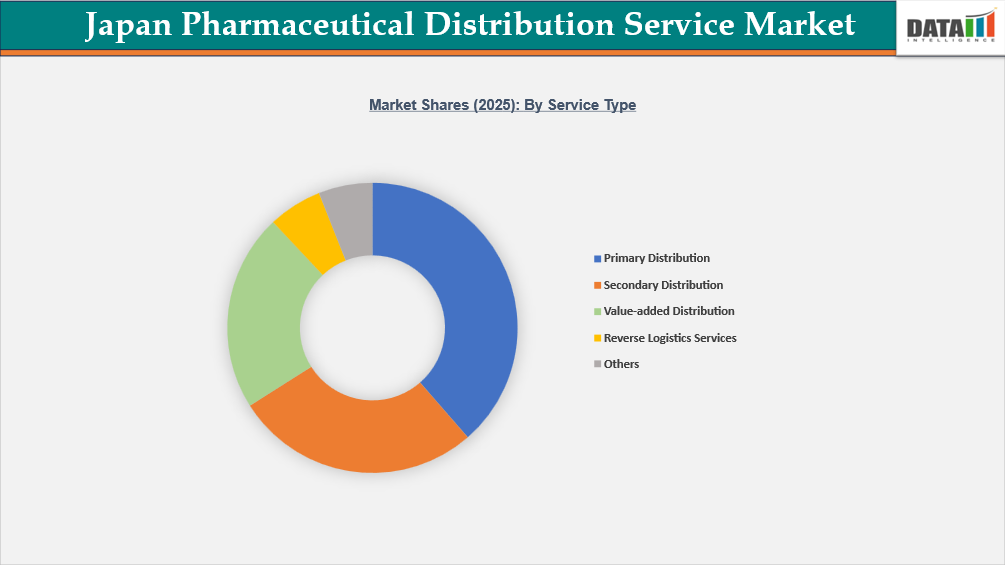
- By service type, primary distribution led the Japan pharmaceutical distribution service market, capturing the largest revenue share of 38.6% in 2025.
Japan Pharmaceutical Distribution Service Market Size and Future Outlook
- 2025 Market Size: US$5.4 Billion
- 2033 Projected Market Size: US$11.8 Billion
- CAGR (2026–2033): 10.3%
For More Detailed Information, Request for Sample
Market Dynamics
Growth in Specialty, Biologic, and High-Value Drug Distribution
The increasing adoption of specialty, biologic, and high-value medicines is a key growth driver of the pharmaceutical distribution service market in Japan. The rising prevalence of complex and chronic diseases is accelerating demand for advanced therapies that require specialized logistics, temperature-controlled storage, and secure transportation. Specialty therapies, including oncology treatments, biologics, and precision medicines, typically require stringent handling standards, encouraging distributors to invest in advanced cold chain infrastructure, digital tracking systems, and quality-controlled warehousing to maintain drug efficacy throughout the supply chain.
From a market composition perspective, biologic drugs accounted for approximately 37% of the top pharmaceutical products by sales in the Japan market, indicating the significant presence of biologic and specialty therapies that require advanced distribution services. This trend is further supported by strict quality and compliance requirements enforced by the pharmaceutical and medical devices agencies, which promote stronger traceability, safety monitoring, and quality assurance across the pharmaceutical supply chain. As the adoption of advanced therapies continues to expand, demand for efficient and technologically enabled pharmaceutical distribution services is expected to remain strong.
Segmentation Analysis
The Japan Pharmaceutical Distribution Service market is segmented based on service type, distribution model, distribution channel, by temperature type, product type, and technology.
Dominance of Primary and Secondary Distribution Driven by Healthcare Demand and Supply Chain Efficiency
The Japan pharmaceutical distribution service market is primarily dominated by primary and secondary distribution services due to the country’s advanced healthcare infrastructure, high medicine consumption, and efficient supply chain ecosystem in Japan. Primary distribution remains a leading segment as it manages bulk transportation of medicines from manufacturers to major wholesalers and regional distribution hubs, supported by strong long-term supply agreements, high production volumes of branded and generic drugs, and strict quality and compliance standards enforced by the regulatory Agency. Secondary distribution also holds a strong position because it facilitates last-mile delivery of pharmaceuticals to hospitals, clinics, and retail pharmacies, driven by Japan’s hospital-centered treatment system, high outpatient prescription demand, and widespread healthcare facility coverage.
Value-added distribution services are growing due to increasing demand for specialty drugs, biologics, and temperature-sensitive medicines that require cold chain logistics, digital tracking, and regulatory compliance support. In contrast, reverse logistics and other services hold relatively smaller shares as they are mainly associated with product returns, recalls, sustainability management, consulting, and niche logistics activities. Overall, market dynamics are strongly influenced by aging demographics, rising chronic disease prevalence, and the increasing adoption of high-value pharmaceutical therapies.
Competitive Landscape
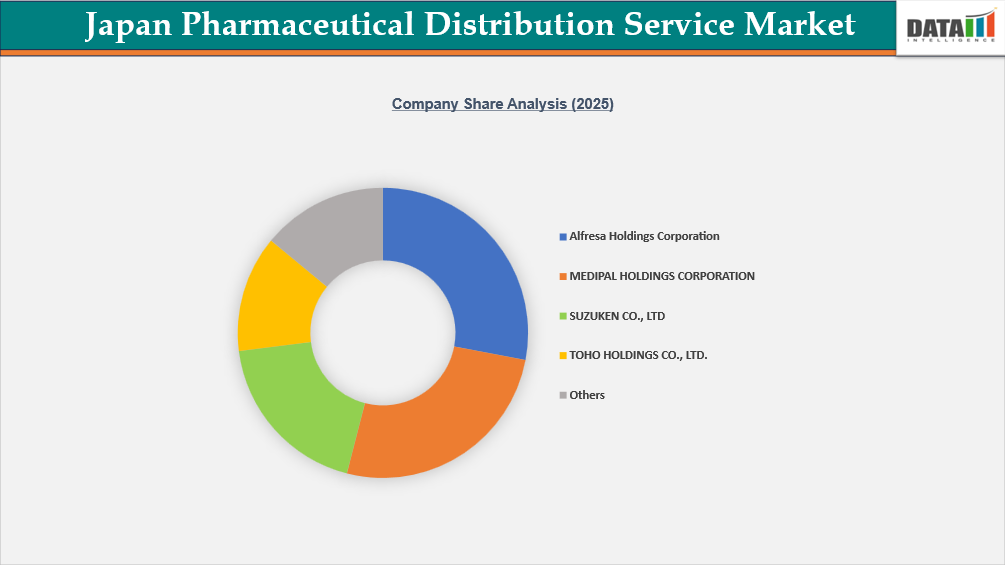
The competitive landscape of the Japanese pharmaceutical distribution service market is moderately consolidated and highly influenced by domestic pharmaceutical manufacturers and large logistics-integrated distributors. Major market participants such as MEDIPAL HOLDINGS CORPORATION, Alfresa Holdings Corporation, SUZUKEN CO., LTD, and TOHO HOLDINGS CO., LTD. dominate the distribution ecosystem by maintaining extensive nationwide supply chain networks, strong hospital procurement relationships, and advanced logistics infrastructure. Logistics-focused companies such as NIPPON EXPRESS HOLDINGS, INC. further strengthen competition by providing specialized pharmaceutical transportation, cold chain logistics, and third-party distribution solutions.
In addition, diversified healthcare and supply companies such as AS ONE Corporation, Vital KSK Holdings, Inc., and WIN-Partners Co., Ltd. compete in regional distribution. Competition is also shaped by pharmaceutical manufacturers that maintain strong market influence through product supply agreements and specialty drug distribution partnerships. Similar to trends observed in specialty drug manufacturing, distribution market participants are focusing on strategic collaborations, digital supply chain integration, automation, and cold chain logistics expansion to support biologics, specialty therapies, and high-value medicines.
Key Developments
- In February 2026, Takeda Pharmaceutical Company Limited, Mitsubishi Logistics Corporation, and Japan Freight Railway Company introduced Japan’s first 31-foot temperature-controlled pharmaceutical transport containers, increasing transport capacity, expanding coverage area, and accelerating the shift toward rail-based, sustainable prescription drug distribution.
What Sets This Japan Pharmaceutical Distribution Service Market Intelligence Report Apart
- Latest Data & Forecasts – Comprehensive and up-to-date market intelligence with forecasts through 2033, covering Japan distribution service demand across key segments based on service type, distribution model, distribution channel, temperature type, product type, and technology adoption in terms of market value.
- Regulatory Intelligence – In-depth analysis of Japan’s pharmaceutical distribution regulations impacting supply chain operations and commercialization, including compliance standards, quality control, and traceability requirements governed by the Pharmaceuticals and Medical Devices Agency.
- Competitive Benchmarking – Structured benchmarking of leading pharmaceutical distribution service providers based on distribution network coverage, logistics infrastructure, service efficiency, strategic partnerships, and technology adoption in supply chain management.
- Actionable Strategies & Cost Dynamics – Strategic insights into supply chain optimization, digital distribution transformation, cold chain expansion, pricing pressures, outsourcing trends, and operational cost management supported by industry expert perspectives.

