


Endotracheal Tube Market: Industry Outlook
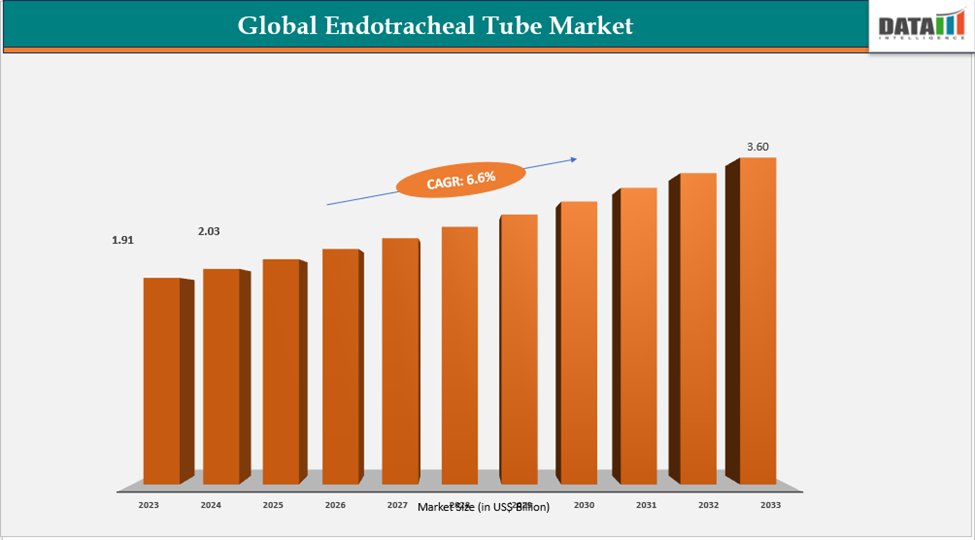
The global endotracheal tube market reached US$ 1.91 billion in 2023, with a rise to US$ 2.03 billion in 2024, and is expected to reach US$ 3.60 billion by 2033, growing at a CAGR of 6.6% during the forecast period 2025–2033.
The endotracheal tube market is experiencing steady growth, driven by the rising incidence of respiratory diseases, increasing surgical procedures requiring general anesthesia, and the growing need for emergency airway management. Conditions such as chronic obstructive pulmonary disease (COPD), acute respiratory distress syndrome (ARDS), and other pulmonary complications are fueling the demand for effective airway access and ventilation support. Additionally, the expanding geriatric population, who are more susceptible to respiratory failure and critical care interventions, is contributing to market expansion. Technological advancements in tube design are also enhancing patient safety and clinical outcomes, further supporting the market’s growth trajectory.
Key Market Trends & Insights
North America accounted for approximately 40.3% of the global Endotracheal Tube market in 2023 and is expected to maintain its dominance throughout the forecast period. This leadership is driven by advanced healthcare infrastructure, high prevalence of respiratory diseases, and widespread adoption of technologically advanced airway management devices.
Asia Pacific is projected to be the fastest-growing region, supported by expanding healthcare access, increasing incidence of respiratory conditions, growing patient awareness, and significant investments in modern medical technologies and critical care facilities.
The Regular Endotracheal Tube segment remains the dominant product type due to its versatility and broad clinical application.
Market Size & Forecast
2024 Market Size: US$ 2.03 Billion
2033 Projected Market Size: US$ 3.60 Billion
CAGR (2025–2033): 6.6%
North America: Largest market in 2024
Asia Pacific: Fastest-growing market
For more details on this report, Request for Sample
Market Dynamics
Driver: Rising Prevalence of Respiratory Diseases
The rising prevalence of respiratory diseases is a key factor expected to drive the growth of the endotracheal tube market. Conditions such as chronic obstructive pulmonary disease (COPD), asthma, pneumonia, acute respiratory distress syndrome (ARDS), and respiratory infections are increasingly common worldwide. For instance, according to the American Lung Association, Chronic Obstructive Pulmonary Disease (COPD) impacts approximately 11.7 million adults and leads to hundreds of thousands of emergency room visits annually, contributing to tens of billions of dollars in healthcare expenditures each year. These illnesses often result in compromised airway function, requiring mechanical ventilation and emergency airway management. Endotracheal tubes are essential in these scenarios to ensure effective oxygen delivery and airway protection, especially in critical care and surgical settings.
Moreover, the growing elderly population, who are more prone to developing chronic respiratory conditions, is contributing to higher hospitalization rates and ICU admissions, further increasing the demand for endotracheal intubation. As healthcare systems continue to manage the burden of respiratory diseases, the need for reliable and efficient airway management tools like endotracheal tubes is expected to rise steadily. This growing clinical demand, combined with advancements in tube design and critical care infrastructure, positions the market for sustained expansion in the coming years.
Restraint: Risk of Complications
The risk of complications associated with endotracheal intubation is expected to act as a significant restraint on the growth of the market. Although endotracheal tubes are essential for airway management, their use can lead to various adverse outcomes. Common complications include ventilator-associated pneumonia (VAP), tracheal stenosis, vocal cord injury, mucosal damage, and unintentional extubation. These risks not only pose serious health concerns for patients but also increase hospital stays, healthcare costs, and the burden on critical care teams.
Additionally, the need for skilled professionals to perform intubation safely limits its use in some settings, especially in low-resource environments. As awareness of these complications grows, both patients and healthcare providers may opt for less invasive alternatives when clinically appropriate. These concerns may reduce the frequency of endotracheal tube usage, particularly in borderline cases, thereby slowing market growth despite the overall need for respiratory support solutions.
Segmentation Analysis
The endotracheal tube market is segmented based on type, route, application, end-user, and region.
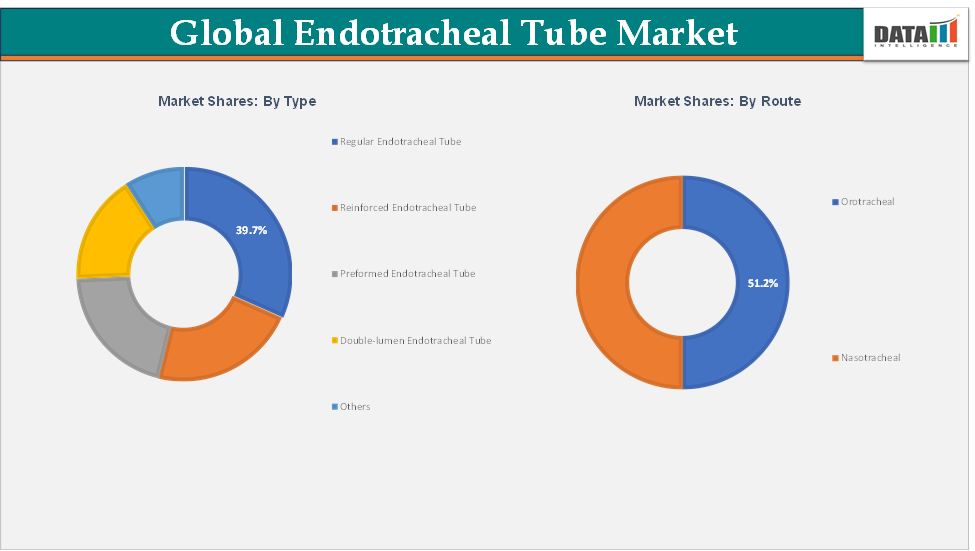
Type-The regular endotracheal tube segment is estimated to have 39.7% of the endotracheal tube market share.
The regular endotracheal tube segment is expected to dominate the market due to its widespread clinical use, cost-effectiveness, and versatility across a broad range of medical settings. These tubes are the standard choice for airway management in surgeries requiring general anesthesia, intensive care units (ICUs), and emergency scenarios, making them essential equipment in hospitals and trauma centers worldwide.
Their straightforward design, ease of insertion, and compatibility with most ventilation systems contribute to their preference among healthcare providers. Regular endotracheal tubes are also available in various sizes and materials, catering to both adult and pediatric patients, further reinforcing their utility. In addition, their lower cost compared to advanced or specialized variants makes them more accessible, particularly in low- and middle-income healthcare systems.
Because of their critical role in routine and emergency airway management and their extensive presence in surgical and critical care protocols, the regular segment continues to hold the largest share of the market. Despite innovations in specialized tube designs, the foundational role of regular endotracheal tubes in clinical practice ensures their continued dominance.
Geographical Analysis
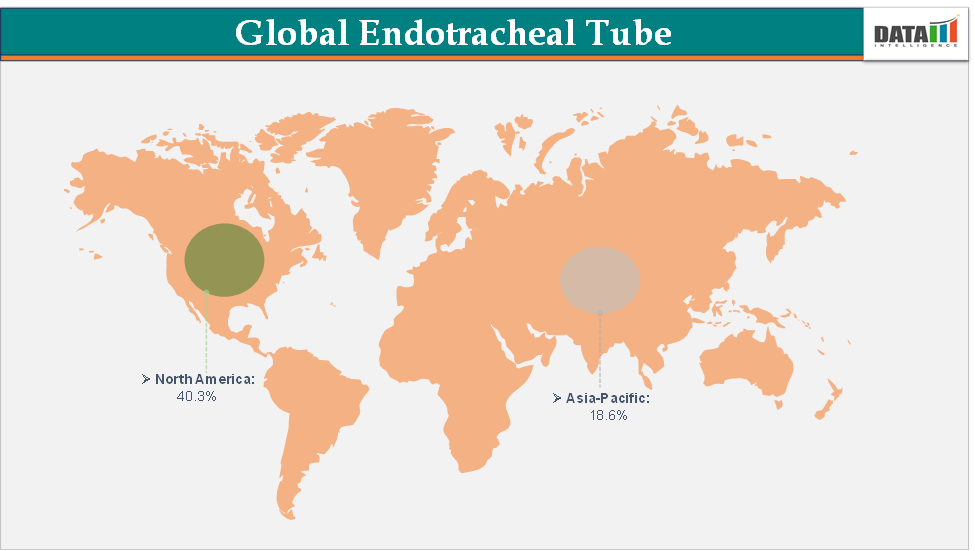
The North America endotracheal tube market was valued at 40.3% market share in 2024
North America is the dominant region in the global endotracheal tube market, primarily due to its advanced healthcare infrastructure, high surgical volumes, and strong presence of key medical device manufacturers. The United States, in particular, sees a high number of procedures requiring general anesthesia and mechanical ventilation, driving consistent demand for endotracheal tubes. For instance, according to the National Institute of Health in 2023, a total of 54,418 cardiac surgeries were conducted during 20 years, with isolated CABG being the most frequently performed surgery. The number is expected to increase in the coming years which increases the demand for endotracheal tubes.
Additionally, the region has a high prevalence of respiratory diseases like COPD, asthma, and pneumonia, particularly among the aging population, further increasing the need for airway management solutions. North America also benefits from widespread adoption of advanced medical technologies, including antimicrobial and subglottic suctioning endotracheal tubes, and strong regulatory oversight ensuring product quality and safety.
The presence of leading players such as Medtronic, Teleflex, and Smiths Medical, along with substantial healthcare expenditure and investment in critical care infrastructure, further supports the region’s market leadership. Moreover, ongoing training of healthcare professionals in airway management and emergency response also contributes to higher usage rates of endotracheal tubes across hospitals and pre-hospital care settings in North America.
The Asia-Pacific Endotracheal Tube market was valued at 18.60% market share in 2024
The Asia-Pacific region is emerging as the fastest-growing market for endotracheal tubes, driven by several key factors. Rapidly expanding healthcare infrastructure, increasing investments in hospital and critical care facilities, and growing access to advanced medical technologies are fueling demand across countries like China, India, Japan, and Southeast Asia.
The region is experiencing a rising prevalence of respiratory diseases such as COPD, asthma, and infections, alongside a growing elderly population that requires more frequent surgical and intensive care interventions. Additionally, increasing awareness about the importance of airway management and improved healthcare access, especially in urban and semi-urban areas, is boosting the adoption of endotracheal tubes.
Economic growth and rising healthcare expenditure enable more hospitals and clinics to upgrade their equipment and adopt modern airway management devices. Moreover, the presence of a large patient pool, combined with government initiatives to improve healthcare standards and medical training, further accelerates market growth. As healthcare systems modernize and the volume of surgeries and emergency care rises, the Asia-Pacific region is set to lead in market expansion globally.
Competitive Landscape
The major players in the endotracheal tube market include Hollister Incorporated, Sterimed Group, Medtronic, Teleflex Incorporated, ANGIPLAST PRIVATE LIMITED, AdvaCare Pharma, among others.
Hollister Incorporated: Hollister Incorporated is a prominent player in the market, specializing in securement solutions that enhance patient safety and comfort during mechanical ventilation. Their flagship product line, AnchorFast, offers a range of oral endotracheal tube fasteners designed to prevent complications such as lip ulcers, tube occlusions, and accidental extubation.
Report Scope
Metrics | Details | |
CAGR | 6.1% | |
Market Size Available for Years | 2022-2033 | |
Estimation Forecast Period | 2025-2033 | |
Revenue Units | Value (US$ Bn) | |
Segments Covered | Type | Regular Endotracheal Tube, Reinforced Endotracheal Tube, Preformed Endotracheal Tube, Double-lumen Endotracheal Tube, Others |
Route | Orotracheal, Nasotracheal | |
Application | Treatments, Emergency Airway Access, Others | |
| End-User | Hospitals, Clinics, Ambulatory Surgical Centers, Others |
Regions Covered | North America, Europe, Asia-Pacific, South America, and the Middle East & Africa | |
The endotracheal tube market report delivers a detailed analysis with 73 key tables, more than 76 visually impactful figures, and 195 pages of expert insights, providing a complete view of the market landscape.



























































