


Upcycled Ingredients Market Overview
The global upcycled ingredients market is gaining momentum as a key solution to the escalating challenges of food waste and environmental sustainability. According to a recent report by the UN Environment Program (UNEP), municipal waste is projected to increase by two-thirds, with associated costs nearly doubling within a generation. This underscores the urgent need for innovative approaches to reduce waste and promote circular economies. Upcycling has emerged as a critical strategy in this effort.
Driven by growing consumer demand for sustainability, advances in food technology and increasing regulatory support, the upcycled ingredients market is expanding rapidly. By repurposing surplus fruits, vegetables, grains and legumes, upcycled ingredients are transforming into a variety of products, from snacks and beverages to nutritional supplements and animal feed. This market offers a promising solution to reduce food waste management, conserve resources and meet the rising demand for eco-friendly, value-added food products.
Key Takeways:
- North America accounted for a significant share of the Upcycled Ingredients Market in 2025, supported by strong consumer demand for sustainable food products, growing adoption of circular economy practices, and the presence of leading upcycled food manufacturers. Food brands across the United States and Canada are increasingly incorporating upcycled ingredients into bakery, snack, beverage, and functional food formulations to reduce food waste and improve sustainability credentials.
- Europe remains a major growth hub for upcycled ingredients, driven by stringent food waste reduction targets, sustainability regulations, and increasing consumer preference for environmentally responsible products. The European Union’s focus on circular food systems is encouraging food processors to transform agricultural by-products and surplus ingredients into value-added food products.
- Asia-Pacific is projected to register the fastest CAGR during the forecast period, fueled by rapid urbanization, increasing food processing activities, rising awareness of sustainable consumption, and government initiatives aimed at reducing food loss and waste. Countries such as China, Japan, India, and Australia are witnessing growing investments in sustainable food innovation and resource-efficient manufacturing practices.
- Food waste reduction has become a strategic priority across the global food industry. Manufacturers are increasingly converting fruit pomace, spent grains, vegetable trimmings, coffee by-products, dairy residues, and other surplus materials into functional ingredients that enhance nutritional value while minimizing environmental impact.
- The bakery and snacks segment continues to lead adoption, as brands utilize upcycled flours, fibers, proteins, and grain-based ingredients to develop clean-label, nutrient-rich, and sustainable products that appeal to environmentally conscious consumers.
- Investment activity is accelerating across the upcycled food ecosystem. Startups, ingredient suppliers, food manufacturers, and sustainability-focused investors are expanding partnerships, acquisitions, and product development initiatives to commercialize innovative upcycled ingredient solutions.
- Technological advancements in ingredient recovery and food processing are improving product quality and scalability. Innovations in drying, fermentation, extraction, and stabilization technologies are enabling manufacturers to transform food by-products into high-value ingredients suitable for mainstream food and beverage applications.
- Consumer purchasing decisions are increasingly influenced by sustainability claims. Upcycled-certified products are gaining visibility in retail channels as consumers seek foods that align with environmental, social, and waste-reduction goals.
Upcycled Ingredients Market Trends
Government support is emerging as a key trend in the upcycled ingredients market through policies that promote circular economy practices. Many governments are introducing incentives, grants, and tax benefits for companies that repurpose food and agricultural waste. Regulatory frameworks are being updated to allow and encourage the safe use of upcycled materials in food and cosmetics.
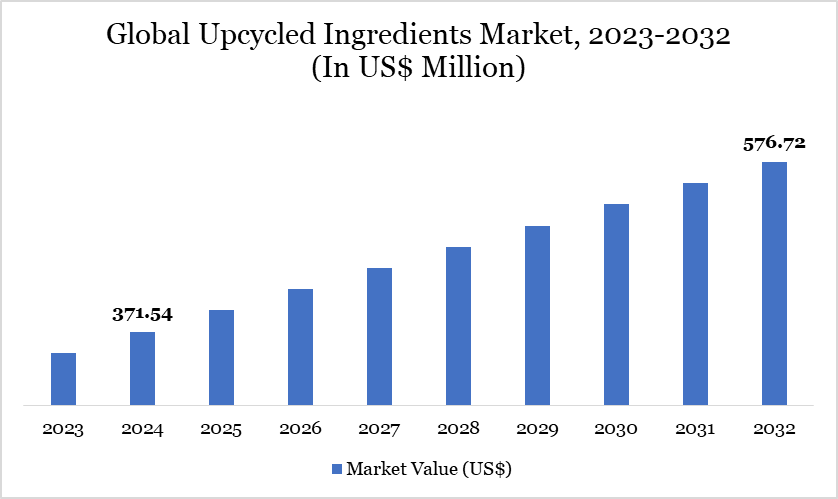
For instance, in June 2024, the USDA, EPA, FDA, and the White House unveiled the National Strategy for Reducing Food Loss and Waste, aiming to cut food waste by 50% by 2030. This initiative, central to President Biden’s climate agenda, tackles food waste’s role in methane emissions while promoting a circular economy. It also supports the growing US$ 46 billion market for upcycled ingredients, positioning US as a global leader in sustainable food systems and organic waste recycling.
For more details on this report – Request for Sample
Upcycled Ingredients Market Scope
Metrics | Details |
By Type | Upcycled Proteins, Upcycled Fibers, Upcycled Oils and Fats, Upcycled Flours, Upcycled Sweeteners, Others |
By Source | Plant-Based, Animal-Based, Others |
By Processing Technology | Fermentation, Pulsed Electric Field (PEF) Assisted Extraction, Pressurized Liquid Extraction (PLE), Supercritical Fluid Extraction (SFE), Membrane-Based Separation, Spray Drying Technology, Others |
By Form | Powders, Liquids, Flakes/Granules, Oils/Fats, Others |
By End-User | Food & Beverages, Cosmetics and Personal Care, Nutraceuticals, Animal Feed and Pet Food, Others |
By Region | North America, South America, Europe, Asia-Pacific, Middle East and Africa |
Report Insights Covered | Competitive Landscape Analysis, Company Profile Analysis, Market Size, Share, Growth |
Upcycled Ingredients Market Dynamics
Role of Upcycled Ingredients in Addressing the Global Waste Crisis
The growing global waste crisis, as outlined in the Global Waste Management Outlook 2024 by UNEP, is driving the need for more sustainable solutions to manage the increasing volume of waste, projected to rise from 2.1 billion tons in 2023 to 3.8 billion tons by 2050. The direct cost of waste management in 2020 was US$ 252 billion, but when factoring in hidden costs from pollution, health impacts and climate change, this figure rose to US$ 361 billion.
The projections reach US$ 640.3 billion by 2050 without significant action. This rising cost underscores the urgency for more sustainable practices, including those found in the global upcycled ingredients market. Upcycled ingredients, derived from food surplus, by-products, or waste materials, directly address the need for waste reduction by converting discarded resources into valuable products, thus lowering the environmental burden of waste disposal.
The circular economy model, promoted by UNEP, offers a potential solution that can not only limit waste management costs to US$ 270.2 billion by 2050 but also generate a net gain of US$ 108.5 billion annually. Upcycled ingredients fit seamlessly into this model by promoting waste avoidance, sustainable practices and resource efficiency. As consumers and industries increasingly demand sustainable solutions, the upcycled ingredients market is growing rapidly.
Lack of Consumer Awareness
Lack of consumer awareness and understanding of the benefits and quality of upcycled products hinders market growth. Many consumers remain unfamiliar with upcycled ingredients and there is a prevalent perception that these products may be of lower quality or unsafe due to their origins in food waste or by-products. Negative consumer perceptions can limit market growth and affect trust in upcycled food products, even when the ingredients are safe and high quality.
The negative perception can create hesitancy, limiting demand and slowing market adoption, particularly in retail food and beverage segments where consumers are cautious about the source and safety of their purchases. Despite growing sustainability trends, the limited awareness of the environmental and nutritional benefits of upcycled ingredients hinders their widespread acceptance, preventing the market from reaching a broader audience and stalling growth potential.
Upcycled Ingredients Market Segment Analysis
The global upcycled ingredients market is segmented based on type, source, processing technology, form, end-user and region.
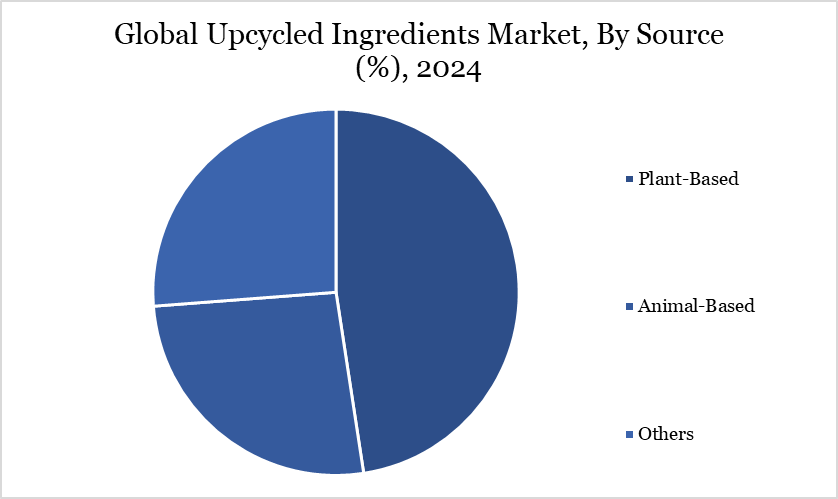
Plant-Based Sources Dominate Global Upcycled Ingredient Market Due to Abundant Availability and High Nutritional Value
The plant-based segment plays a dominating role in the global upcycled ingredients market by driving both its growth and innovation. The market taps into the growing demand for plant-based foods, where a vegan population of 88 million vegans in the world, according to the World Animal Foundation, aligns with trends focused on sustainability, waste reduction, and cleaner labels.
As consumers increasingly seek sustainable, eco-friendly food options, upcycled plant-based ingredients provide an ideal solution. The plant-based ingredients, derived from surplus or discarded plant materials (such as fruit peels, stems or grains), are gaining traction for their ability to reduce food waste while offering nutritional benefits. As the global shift towards plant-based diets intensifies, the demand for upcycled plant-based ingredients continues to grow.
Why Upcycled Ingredients Market Matters in 2026
The global food, beverage, cosmetics, and nutraceutical industries are undergoing a significant sustainability transformation.
Upcycled ingredients are expected to redefine resource efficiency by converting food by-products, agricultural surplus, and manufacturing side streams into high-value ingredients, reducing waste while creating new revenue opportunities across industries.
Several macroeconomic and industry factors are driving market growth:
- Increasing global focus on food waste reduction
- Growing adoption of circular economy practices
- Expansion of clean-label and natural ingredient trends
- Strong corporate ESG and sustainability commitments
- Technological advancements in ingredient recovery and processing
- Increasing demand for sustainable nutrition solutions
- Government initiatives supporting waste reduction and resource optimization
- Growing investment in sustainable food innovation
Analyst View
DataM Intelligence Analyst Perspective
The upcycled ingredients market is evolving from a niche sustainability initiative into a commercially scalable circular economy ecosystem.
The long-term success of the upcycled ingredients market will depend on:
- Consumer acceptance and awareness
- Consistent raw material availability
- Regulatory compliance and product safety
- Advancements in processing technologies
- Cost competitiveness with conventional ingredients
- Brand sustainability commitments
- Supply chain transparency and traceability
- Strategic partnerships across food and ingredient value chains
North America continues to lead market adoption due to strong sustainability awareness and corporate ESG initiatives, while Europe benefits from stringent waste reduction regulations and circular economy policies. Asia-Pacific is emerging as a high-growth region supported by expanding food processing industries, rising environmental awareness, and increasing investments in sustainable food innovation.
Upcycled Ingredients Market Geographical Share
Demand for Sustainable Products in North America
North America dominates the upcycled ingredients market due to growing consumer demand for sustainable products, strong industry infrastructure and innovation. The US is responsible for over 12% of global waste, despite representing just 4% of the world’s population, as reported by Environment America. Nearly 60 million tons of food 30-40% of the US food supply are discarded annually, equating to 325 pounds per person, according to the USDA and Recycle Track Systems.
The massive waste problem presents a significant opportunity for upcycled ingredients, as companies like ReGrained and Toast Ale repurpose surplus food, such as spent grains and unsold bread, into valuable products. Corporate giants like PepsiCo and Nestlé are increasingly incorporating upcycled ingredients into their products, supporting their sustainability goals while tackling the food waste crisis. With government initiatives and a growing focus on the circular economy, the region leads the market.
Sustainability Analysis
The growing upcycled ingredients market is gaining momentum as both consumers and brands increasingly recognize the value of reducing food waste and promoting sustainability with the launch of new products into the market. For instance, in February 2024, Warner’s Distillery launched Trash and Treasure Spirits, a range of spirits made from surplus food and ingredients, including unwanted fruits and peels that would otherwise go to waste.
With offerings like Tropical Rum and Citrus Vodka, the brand highlights the potential of repurposing discarded ingredients into premium products, catering to eco-conscious consumers who want to make a positive environmental impact with their purchasing decisions. Similarly, in August 2024, Upcycled Foods, Inc. unveiled Atoria’s Family Bakery Mini Upcycled Naan, a collaboration with the Upcycled Foods Lab. These mini flatbreads are made from upcycled barley, wheat and rye flour rescued from the beer-making process and are fortified with ReGrained SuperGrain+.
Certified by the Upcycled Food Standard, this product exemplifies the growing trend of transforming waste into valuable food items, aligning with the global push toward more sustainable food systems. The upcycled ingredients market is flourishing across various industries spirits and baked goods, offering innovative solutions to food waste while promoting a circular economy.
Upcycled Ingredients Market Major Players
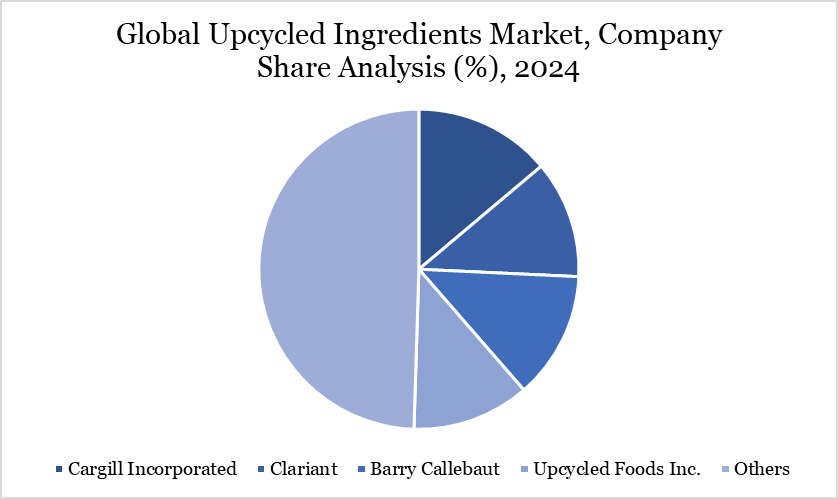
The major global players in the market include Cargill Incorporated, Clariant, Barry Callebaut, Upcycled Foods, Inc., International Flavors & Fragrances Inc., Actylis, Kaffe Bueno, Upcycled Beauty Ltd, GREENTECH and dsm-firmenich.
Upcycled Ingredients Market Key Developments
- May 2026: Big Idea Ventures and Mars Petcare launched the 2026 Next Generation Pet Food Program in collaboration with AAK, Bühler, Givaudan, and Ingredion to accelerate innovation in sustainable and upcycled ingredients for pet nutrition.
- May 2026: B-SIDES secured seed funding to expand its snack portfolio made from upcycled ingredients sourced from oat milk and grits production, supporting retail growth and ingredient sourcing capabilities.
- May 2026: Industry reports highlighted growing retail adoption, certification programs, and functional ingredient innovation as key factors driving the commercialization of upcycled ingredients across food and beverage applications.
- April 2026: The Upcycled Food Association launched a Canada Hub in partnership with Vineland Research and Innovation Centre to strengthen collaboration and accelerate growth across the upcycled food and ingredient value chain.
- April 2026: Seven Sundays expanded its cereal portfolio with PB Puffs cereals made using upcycled oat protein and upcycled non-GMO corn flour, reinforcing the use of upcycled ingredients in mainstream breakfast products.
- March 2026: PhenOlives launched the world's first commercial production line for upcycled olive flour in Israel, converting olive oil processing byproducts into high-value, fiber-rich food ingredients.
- March 2026: Roots Farm Fresh expanded its frozen food portfolio with hash browns and potato snacks produced from upcycled organic potatoes, helping reduce food waste while supporting sustainable food manufacturing.
- January–February 2026: Upcycled ingredient adoption continued to expand across food, beverage, and personal care sectors as brands increased investments in circular sourcing strategies and sustainable product development.
Upcycled Ingredients Market Investment & Funding Analysis
Global investments in sustainable food innovation and circular economy solutions continue to rise significantly.
Major funding areas include:
- Food waste valorization technologies
- Upcycled ingredient manufacturing
- Sustainable food processing solutions
- Alternative protein development
- Circular supply chain innovations
- Sustainable packaging and food recovery infrastructure
Strategic Recommendations
For Food & Beverage Manufacturers
- Expand adoption of upcycled ingredients across product portfolios
- Collaborate with ingredient innovators and sustainability-focused suppliers
- Invest in circular economy and waste reduction initiatives
For Investors
- Focus on scalable upcycled food technology platforms
- Monitor consumer demand for sustainable food products
- Evaluate companies with strong sustainability certifications and supply networks
For Governments & Regulatory Bodies
- Support food waste reduction initiatives
- Encourage sustainable food production practices
- Develop policies that promote circular economy adoption within the food industry
Why Buy This Upcycled Ingredients Report?
This report helps organizations:
- Understand future sustainability trends in the food industry
- Identify high-growth investment opportunities
- Benchmark competitors effectively
- Analyze evolving consumer preferences
- Optimize market entry strategies
- Evaluate innovation and product development opportunities
- Assess regional growth potential
- Track circular economy and sustainability developments
What’s Included in the Upcycled Ingredients Report?
The report provides:
- Market size & forecast analysis
- Regional growth outlook
- Competitive intelligence
- Product innovation benchmarking
- Pricing analysis
- Regulatory assessment
- Supply chain insights
- Market share analysis
- Investment landscape analysis
- Strategic recommendations
- Emerging trends analysis
- Company profiling
Who Should Buy This Report?
This Upcycled Ingredients report is ideal for:
- Food & beverage manufacturers
- Ingredient suppliers
- Sustainable food startups
- Alternative protein companies
- Retail and private-label brands
- Venture capital firms
- Institutional investors
- Food technology companies
- Sustainability consultants
- Market intelligence teams
- Government agencies
- Agricultural processors
- Manufacturers/ Buyers
- Industry Investors/Investment Bankers
- Research Professionals
- Emerging Companies
Key Benefits for Stakeholders
Gain actionable market intelligence:
- Understand future sustainable food industry trends
- Analyze global adoption strategies
- Evaluate product innovation developments
- Identify strategic growth opportunities
- Benchmark market competitors
- Improve investment decision-making
- Track circular economy advancements
- Assess evolving consumer demand for sustainable products



























































