


Chronic Obstructive Pulmonary Disease (COPD) Drugs Market Size
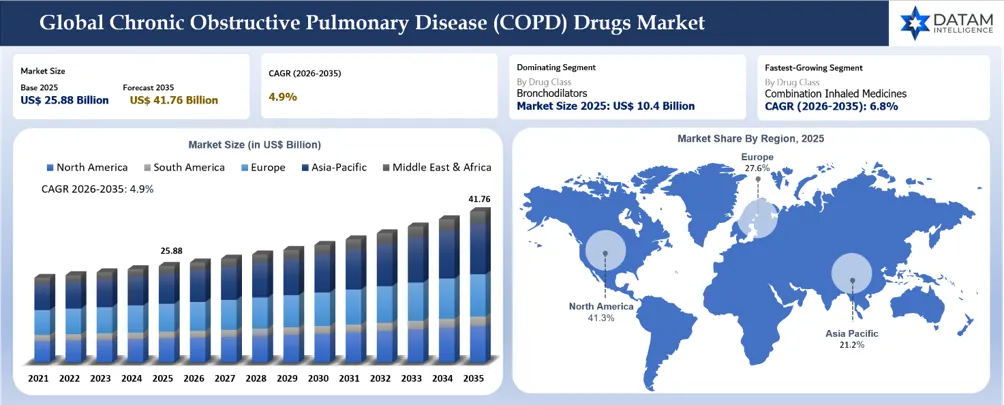
The global chronic obstructive pulmonary disease (COPD) drugs market reached US$25.88 billion in 2025 and is expected to reach US$41.76 billion by 2035, growing with a CAGR of 4.9% during the forecast period 2026-2035.
Market expansion is supported by the rising diagnosed COPD population, population ageing, continued exposure to tobacco smoke and air pollution, and increasing demand for long-term maintenance treatment. Bronchodilators remain the market’s revenue foundation, particularly long-acting muscarinic antagonists and long-acting beta agonists used independently or in combination. Commercial demand is progressively shifting toward dual and triple inhaled therapies that simplify treatment, improve adherence and reduce exacerbation risk. However, underdiagnosis, inadequate spirometry access, incorrect inhaler technique, treatment discontinuation and affordability constraints continue to limit eligible-patient conversion and sustained prescription volumes.
Precision treatment represents an emerging growth vector as eosinophil counts and Type 2 inflammatory markers increasingly guide therapy selection. Regulatory progress involving biologics for patients with uncontrolled COPD despite optimized inhaled therapy is expanding the addressable market beyond conventional bronchodilators, inhaled corticosteroids and phosphodiesterase inhibitors. Competitive advantage will depend on clinically meaningful exacerbation reduction, appropriate patient identification, convenient dosing and reimbursement support.
The next value-creation cycle will center on single-inhaler triple therapies, biomarker-guided biologics, novel anti-inflammatory mechanisms and differentiated inhalation platforms. Sustainable leadership will require strong clinical evidence, intuitive delivery devices, real-world adherence improvement and cost-effective positioning. Companies integrating pharmaceutical innovation with diagnostic pathways, patient-support programs and disciplined market-access strategies will be best positioned to capture premium growth.
Chronic Obstructive Pulmonary Disease (COPD) Drugs Market Key Takeaways
- Sustained Market Expansion Through 2035: The global COPD drugs market reached US$25.88 billion in 2025 and is projected to reach approximately US$41.76 billion by 2035, registering a CAGR of 4.9% during 2026-2035.
- Bronchodilators Maintain Market Leadership: Bronchodilators accounted for an estimated 40.2% market share in 2025, equivalent to approximately US$10.40 billion, supported by the established use of long-acting muscarinic antagonists and long-acting beta agonists in maintenance therapy.
- Combination Inhaled Medicines Represent the Primary Growth Engine: Combination inhaled medicines are expected to record the fastest growth at an estimated 6.8% CAGR during 2026-2035, driven by increasing adoption of dual and triple therapies, single-inhaler convenience and improved exacerbation control.
- North America Maintains Regional Dominance: North America accounted for an estimated 41.3% of the global market in 2025, representing approximately US$10.69 billion, supported by high diagnosed prevalence, established reimbursement, specialist access and rapid uptake of advanced inhaled therapies and biologics.
- Precision COPD Treatment Reshapes Competitive Strategy: Future market leadership will increasingly depend on biomarker-guided biologics for eosinophilic and Type 2 COPD, differentiated inhaler platforms, real-world exacerbation reduction, treatment adherence and payer acceptance. Companies integrating patient identification, respiratory diagnostics and broad market access will be best positioned to capture growth.
Chronic Obstructive Pulmonary Disease (COPD) Drugs Market Scope
| Metrics | Details | |
| 2025 Market Size | US$25.88 Billion | |
| 2035 Projected Market Size | US$41.76 Billion | |
| CAGR (2026-2035) | 4.9% | |
| Largest Market | North America | |
| Fastest Growing Market | Asia-Pacific | |
| By Drug Class | Bronchodilators, Beclomethasone, Combination Inhaled Medicines, Phosphodiesterase Inhibitor (Roflumilast), Antibiotics (Azithromycin), Others | |
| By Route of Administration | Inhalation, Oral, Others | |
| By Distribution Channel | Hospital Pharmacies, Hospital Pharmacies, Retail Pharmacies, Online Pharmacies | |
| By Region | North America | U.S., Canada, Mexico |
| Europe | Germany, UK, France, Spain, Italy, Poland | |
| Asia-Pacific | China, India, Japan, Australia, South Korea, Indonesia, Malaysia, Singapore, Vietnam, Thailand, Philippines, Taiwan | |
| South America | Brazil, Argentina | |
| Middle East and Africa | Israel, Saudi Arabia, UAE, Turkiye, South Africa, Nigeria | |
| Report Insights Covered | Competitive Landscape Analysis, Company Profile Analysis, Market Size, Share, Growth | |
Chronic Obstructive Pulmonary Disease (COPD) Drugs Market White Space & Investment Opportunities
- Earlier Diagnosis and Risk Stratification: Invest in portable spirometry, case-finding algorithms, AI-enabled imaging, digital biomarkers and primary-care screening pathways for smokers and other high-risk populations. Earlier identification can increase timely initiation of maintenance therapy and reduce progression to severe, exacerbation-prone COPD.
- Biomarker-Guided Biologics for Type 2 COPD: Develop biologics targeting eosinophilic and Type 2 inflammation among patients experiencing exacerbations despite optimized triple inhaled therapy. Commercial opportunities include standardized eosinophil testing, phenotype-based prescribing tools, specialist referral networks and evidence supporting treatment in broader COPD subpopulations.
- Novel Non-Steroidal Anti-Inflammatory Therapies: Advance therapies targeting interleukin pathways, mucus hypersecretion, neutrophilic inflammation, inflammasome activation and airway-remodelling mechanisms. Effective oral or inhaled treatments with favorable safety profiles could address patients inadequately controlled by corticosteroid-containing regimens.
- Simplified and Digitally Enabled Inhalation Platforms: Invest in single-inhaler dual and triple therapies, breath-actuated devices, soft-mist inhalers, connected inhalers and dose-tracking technologies. Platforms that reduce administration errors, monitor adherence and provide actionable patient data can improve persistence while differentiating otherwise comparable drug combinations.
- Treatment Sequencing and Phenotype-Specific Evidence: Generate comparative and real-world evidence defining when patients should progress from monotherapy to dual bronchodilation, inhaled triple therapy, phosphodiesterase inhibitors or biologics. Clear sequencing based on exacerbation history, eosinophil count, symptoms, comorbidities and prior treatment could improve clinical and economic outcomes.
- Emerging-Market Access and Outcome-Based Reimbursement: Expand affordable maintenance therapies, spirometry access and respiratory-care capacity across underserved markets. Value-based agreements linking therapy performance to exacerbation reduction, hospitalization avoidance, adherence and quality-of-life improvement could accelerate reimbursement for premium inhaled medicines and biologics.
Chronic Obstructive Pulmonary Disease (COPD) Drugs Market Buyer Decision-Making Criteria
Major Buyer Decision-Making Criteria:
- Reduction in Moderate and Severe COPD Exacerbations
- Improvement in Lung Function, Including FEV1
- Symptom Control and Reduction in Rescue-Medication Use
- Effectiveness by COPD Severity and Exacerbation History
- Suitability for Eosinophilic and Type 2 Inflammation-Associated COPD
- Blood Eosinophil Thresholds and Other Biomarker Requirements
- Effectiveness Despite Optimized Dual or Triple Inhaled Therapy
- Safety, Tolerability and Long-Term Clinical Evidence
- Risk of Pneumonia, Cardiovascular Events and Systemic Adverse Effects
- Inhaler Type, Device Usability and Patient-Inhalation Capability
- Route of Administration, Dosing Frequency and Treatment Burden
- Single-Inhaler Availability and Regimen Simplification
- Improvement in Exercise Capacity, Functional Status and Quality of Life
- Adherence, Persistence and Correct Inhaler Technique
- Hospitalization and Emergency-Department Visit Reduction
- Compatibility with Existing Bronchodilator and Corticosteroid Regimens
- Pricing, Reimbursement and Overall Treatment Cost
- Guideline Positioning, Regulatory Approval and Physician Experience
- Formulary Availability and Payer Prior-Authorization Requirements
- Manufacturing Reliability, Geographic Availability and Patient-Support Services
Chronic Obstructive Pulmonary Disease (COPD) Drugs Market BCG Matrix: Company Evaluation

STAR
GSK plc, AstraZeneca PLC, Boehringer Ingelheim International GmbH and Chiesi Farmaceutici S.p.A. are positioned in the Star category based on their extensive COPD portfolios, strong global commercialization capabilities and established presence across maintenance and combination therapies. GSK maintains a leading position through Trelegy Ellipta, Anoro Ellipta, Incruse Ellipta and Nucala. AstraZeneca competes through Breztri Aerosphere, Bevespi Aerosphere, Symbicort and Daliresp, while Boehringer Ingelheim maintains a strong franchise through Spiriva Respimat, Stiolto Respimat and Combivent Respimat.
Chiesi strengthens its competitive position through Trimbow and other inhaled respiratory therapies, particularly across European markets. These companies benefit from broad physician familiarity, extensive clinical evidence, established reimbursement and diversified inhaler platforms. Future leadership will depend on biologic adoption, indication expansion, improved exacerbation prevention, simplified dosing, connected-inhaler integration and real-world evidence demonstrating reductions in hospitalization and total treatment costs. Companies integrating pharmacological innovation with effective inhaler technology and patient-support programs are expected to retain stronger commercial positioning.
POTENTIAL
Merck & Co., Inc., Sanofi, Regeneron Pharmaceuticals, Inc., Theravance Biopharma, Inc., Viatris Inc., Novartis AG and Verona Pharma-originated assets are positioned within the Potential category because of differentiated mechanisms, biologic therapies, nebulized maintenance treatments and opportunities for portfolio expansion. Merck has strengthened its COPD position through Ohtuvayre, obtained through its acquisition of Verona Pharma, introducing an inhaled dual phosphodiesterase 3 and phosphodiesterase 4 inhibitor for adult maintenance treatment.
Sanofi and Regeneron are expanding phenotype-directed COPD treatment through Dupixent for patients with type 2 inflammation. Theravance Biopharma and Viatris participate through Yupelri, a once-daily nebulized long-acting muscarinic antagonist, while Novartis retains established bronchodilator products and respiratory-development capabilities. Progression toward the Star category will depend on broader geographic approvals, physician adoption, payer coverage, competitive pricing, differentiation from triple inhaled therapy and evidence of sustained reductions in exacerbations. Successful biomarker implementation, specialist education, manufacturing scalability and commercialization partnerships will be critical to capturing larger market shares.
Chronic Obstructive Pulmonary Disease (COPD) Drugs Market Dynamics
Driver Impact Analysis
| Driver | Market Growth Impact (%) | Demand Concentration | Impacted Use Case | Strategic Impact |
Expansion of Biomarker-Guided Biologics for Eosinophilic and Type 2 COPD | 18.7% | Initially concentrated in North America and Europe; expanding across developed Asia-Pacific markets | Add-on maintenance treatment for patients experiencing exacerbations despite optimized triple inhaled therapy | Adoption of Dupixent, Nucala and emerging biologics is shifting COPD treatment toward phenotype-based prescribing, increasing treatment value per eligible patient and creating a premium specialty-drug segment. |
Treatment Escalation Toward Single-Inhaler Triple Maintenance Therapy | 17.3% | High across the United States, major European markets and Japan; increasing in urban centers across emerging economies | Maintenance treatment for symptomatic patients inadequately controlled with single or dual bronchodilator therapy | Single-inhaler combinations improve regimen simplicity and support adherence while enabling manufacturers to consolidate bronchodilator and corticosteroid components within differentiated, higher-value products. |
Rising Pharmacological Intervention Following Recurrent COPD Exacerbations | 15.8% | High among aging populations and patients with previous emergency visits or hospitalizations | Prevention of moderate-to-severe exacerbations, hospital readmissions and accelerated lung-function decline | Greater recognition of post-exacerbation mortality and readmission risks is encouraging earlier treatment escalation, longer maintenance duration and increased utilization of triple therapies, biologics and anti-inflammatory drugs. |
Commercialization of Novel Nonsteroidal and Dual-Mechanism Inhaled Therapies | 14.6% | Led by the United States, followed by markets providing reimbursement for differentiated respiratory therapies | Maintenance treatment for patients with persistent symptoms despite existing inhaled bronchodilators | Ohtuvayre and pipeline therapies targeting phosphodiesterase and interleukin pathways expand treatment beyond conventional mechanisms, creating opportunities for combination use, portfolio diversification and improved management of residual symptoms. |
Driver: Expansion of Biomarker-Guided Biologics for Eosinophilic and Type 2 COPD
The expansion of biomarker-guided biologics is reshaping COPD treatment by enabling clinicians to identify patients whose exacerbations are driven by eosinophilic or type 2 inflammation. Blood eosinophil testing supports more precise selection of add-on therapies for patients who remain uncontrolled despite optimized inhaled triple therapy. This approach moves COPD management beyond uniform bronchodilator escalation toward phenotype-directed treatment. The regulatory acceptance of Dupixent and Nucala for defined COPD populations has established biologics as a commercially viable treatment class and expanded opportunities for specialist prescribing.
Market growth will be supported by increased biomarker testing, earlier referral to pulmonologists and stronger clinical evidence linking targeted therapy with fewer exacerbations and hospitalizations. Pipeline agents targeting interleukin-33 and other inflammatory pathways could further widen the addressable population beyond patients with high eosinophil levels. However, commercial success will depend on standardized testing thresholds, reliable patient identification, payer coverage and evidence demonstrating economic value relative to established inhaled therapies. Companies combining differentiated biologics with diagnostic guidance, physician education, real-world evidence and patient-support programs will be best positioned to capture premium treatment opportunities and strengthen long-term therapy persistence.
Restraint Impact Analysis
| Restraint | Drag on Market Growth (%) | Primary Impact Area | Impacted Use Case | Strategic Impact |
Persistent Spirometry Gaps Delaying Diagnosis and Maintenance-Therapy Initiation | 16.9% | Patient identification, disease staging and treatment initiation | Undiagnosed or clinically suspected patients requiring confirmation of persistent airflow obstruction | Limited spirometry availability and inconsistent testing leave patients outside formal treatment pathways, reducing the diagnosed and prescription-eligible population and delaying initiation of long-term maintenance drugs. |
Narrow Biomarker Eligibility Restricting Biologic-Treatment Uptake | 14.8% | Patient selection, specialist referral and biologic prescribing | Patients with recurrent exacerbations despite triple therapy who do not meet eosinophil or type 2 inflammation criteria | Eosinophil thresholds, testing variability and phenotype-specific labels narrow the addressable population for premium biologics, limiting prescribing outside specialist respiratory centers. |
Inhaler Technique Failures and Device Switching Undermining Treatment Persistence | 13.6% | Medication delivery, adherence and real-world effectiveness | Elderly patients, patients with reduced inspiratory capacity and individuals using multiple inhaler devices | Incorrect technique and device incompatibility reduce effective drug deposition and perceived clinical benefit, increasing discontinuation, switching and preventable exacerbations despite prescription availability. |
Payer Step-Therapy Requirements Constraining Access to Premium COPD Drugs | 12.7% | Reimbursement, formulary placement and treatment escalation | Patients requiring single-inhaler triple therapy, biologics or novel maintenance treatments after inadequate control | Prior authorization and mandatory failure of lower-cost inhaled therapies delay access to differentiated drugs, extend approval timelines and create geographic inequality in commercial adoption. |
Restraint: Persistent Spirometry Gaps Delaying Diagnosis and Maintenance-Therapy Initiation
Persistent gaps in access to quality-assured spirometry restrict the identification of patients eligible for long-term COPD drug therapy. Diagnosis is frequently based on symptoms, smoking history or recurrent respiratory infections without confirmation of persistent airflow obstruction. Limited equipment availability, insufficiently trained personnel and inconsistent test interpretation are particularly significant across primary-care and resource-constrained settings. Consequently, many patients remain undiagnosed until they experience severe symptoms or hospitalization, delaying initiation of long-acting bronchodilators, inhaled combination therapies and exacerbation-prevention treatments. Conversely, diagnosis without spirometric confirmation can lead to inappropriate prescribing and inefficient pharmaceutical expenditure.
From a market perspective, delayed diagnosis reduces the treated population, shortens maintenance-therapy duration and limits progression from rescue medication to dual or triple therapy. Spirometry gaps also weaken disease staging and biomarker-led treatment pathways by delaying specialist referrals and comprehensive phenotyping. Pharmaceutical companies therefore face slower patient conversion despite a substantial underlying COPD burden. Addressing this restraint requires portable spirometry, standardized primary-care testing, automated interpretation, high-risk population screening and integration of diagnostic results into treatment algorithms. Manufacturers that support diagnostic partnerships, clinician education and post-exacerbation case finding can expand the prescription-eligible population while improving treatment accuracy and long-term persistence.
Market Segment Analysis
The global chronic obstructive pulmonary disease (COPD) drugs market is segmented based on drug class, route of administration, distribution channel, and region.
Drug Class:
The bronchodilators segment is expected to dominate the global chronic obstructive pulmonary disease (COPD) drugs market share
The bronchodilators segment holds a major portion of the global chronic obstructive pulmonary disease (COPD) drugs market share and is expected to continue to hold a significant portion of the global chronic obstructive pulmonary disease (COPD) drugs market share during the forecast period.
The bronchodilators segment is a vital part of the global COPD drugs market, primarily due to its effectiveness in alleviating the symptoms of chronic obstructive pulmonary disease (COPD). Bronchodilators are medications that relax and widen the airways, enhancing airflow and making it easier for patients to breathe. Below is a comprehensive overview of this segment:
Types of bronchodilators include beta-adrenergic agonists, SABAs, albuterol (ProAir, Ventolin), LABAs, salmeterol (Serevent), formoterol (Foradil) , anticholinergics, combination bronchodilators and others. These products combine different classes of bronchodilators or include corticosteroids to enhance efficacy and provide comprehensive symptom management.
The increasing prevalence of respiratory conditions such as COPD is a primary driver for the bronchodilator segment. Factors such as smoking, air pollution, and an aging population contribute to higher rates of COPD, thereby increasing demand for bronchodilator therapies.
Furthermore, key players in the industry product launches and approvals that would drive this segment growth in the COPD drugs market. For instance, in June 2024, Verona Pharma plc announced that the U.S. Food and Drug Administration (FDA) has approved Ohtuvayre (ensifentrine) for the maintenance treatment of chronic obstructive pulmonary disease (COPD) in adult patients. This approval is particularly notable as Ohtuvayre is the first inhaled product with a novel mechanism of action to be introduced for the maintenance treatment of COPD in over 20 years.
Ohtuvayre (ensifentrine) is a first-in-class selective dual inhibitor of the enzymes phosphodiesterase 3 (PDE3) and phosphodiesterase 4 (PDE4). This innovative medication combines both bronchodilator and non-steroidal anti-inflammatory effects within a single molecule. It is administered directly to the lungs using a standard jet nebulizer, eliminating the need for high inspiratory flow rates or complex hand-breath coordination. These factors have solidified the segment's position in the global chronic obstructive pulmonary disease (COPD) drugs market.
Chronic Obstructive Pulmonary Disease (COPD) Drugs Market Geographical Penetration

U.S. Chronic Obstructive Pulmonary Disease (COPD) Drugs Market Landscape
The U.S. COPD drugs market is supported by a substantial and ageing patient population requiring long-term symptom control and exacerbation prevention. According to a CDC report published in April 2026, 7.0% of U.S. adults aged 45 years and older had been diagnosed with COPD in 2024. Prevalence rises markedly with age and remains elevated in nonmetropolitan communities, where smoking exposure, occupational risks and limited specialist access contribute to greater disease burden. These epidemiological patterns sustain demand for rescue bronchodilators, long-acting maintenance therapies and single-inhaler triple combinations.
COPD also creates a significant mortality and healthcare-utilization burden. CDC data updated in 2026 recorded 145,643 deaths from chronic lower respiratory diseases in 2024, reinforcing the need for earlier diagnosis and stronger exacerbation prevention. CDC Commercial growth will increasingly depend on identifying high-risk patients after emergency visits or hospitalization and transitioning them toward optimized maintenance treatment. Biomarker-guided biologics, including therapies for eosinophilic and type 2 COPD, are expanding the addressable treated population. However, spirometry gaps, rural access limitations, inhaler misuse and inconsistent treatment persistence continue to restrict market conversion.
Japan Chronic Obstructive Pulmonary Disease (COPD) Drugs Market Outlook
Japan’s COPD drugs market is shaped by a large but substantially underdiagnosed patient population. A 2025 statement from the Japanese Respiratory Society estimated that approximately 5.3 million people in Japan have COPD, reflecting accumulated tobacco exposure, occupational inhalation risks and the country’s ageing population. However, COPD frequently remains unrecognized because chronic cough, sputum production and breathlessness may be attributed to ageing or smoking rather than persistent airflow obstruction. Limited routine spirometry in primary care further delays diagnosis until patients experience advanced symptoms or acute exacerbations.
The same source reported that only approximately 7% of the estimated COPD population was receiving treatment, demonstrating a substantial diagnosis-to-treatment gap. This epidemiological imbalance constrains current prescription volumes but creates considerable potential for case finding, spirometry-led confirmation and earlier maintenance-therapy initiation. Demand is expected to remain concentrated among older adults, former smokers and patients with recurrent respiratory events. Long-acting bronchodilators and combination inhalers will remain treatment foundations, while biomarker-guided biologics can address uncontrolled patients with eosinophilic inflammation. Market expansion will depend primarily on improving disease recognition, primary-care screening, pulmonologist referrals and continuity of maintenance treatment.
Chronic Obstructive Pulmonary Disease (COPD) Drugs Market Competitive Landscape
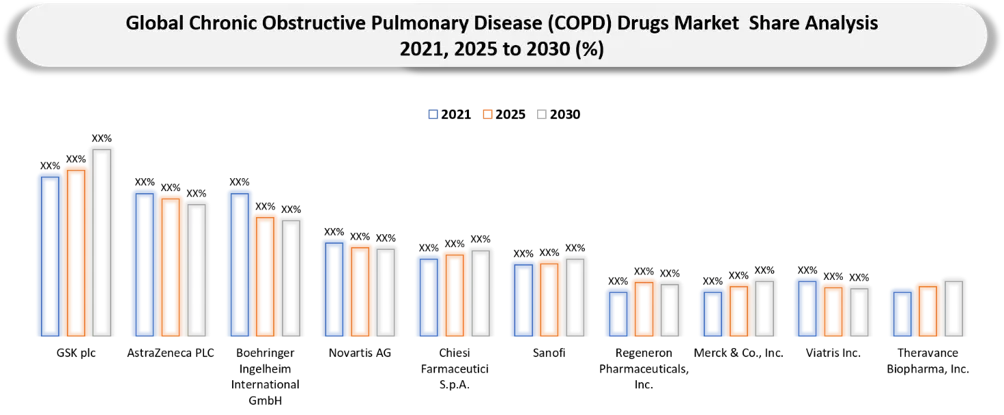
- The global COPD drugs market is moderately consolidated, with GSK, AstraZeneca, Boehringer Ingelheim, Novartis and Chiesi maintaining strong positions through established inhaled bronchodilator and combination-therapy portfolios. Competition centers on long-acting muscarinic antagonists, long-acting beta agonists, inhaled corticosteroid combinations and single-inhaler triple therapies. Trelegy Ellipta, Breztri Aerosphere, Spiriva, Stiolto Respimat and Trimbow represent important branded products competing on exacerbation reduction, lung-function improvement, dosing convenience and inhaler usability. Meanwhile, Cipla, Lupin, Teva, Viatris, Sandoz, Hikma and other generic manufacturers strengthen price competition and expand access across cost-sensitive markets.
- Competitive differentiation is increasingly shifting toward novel mechanisms, biologics and phenotype-guided treatment. Sanofi and Regeneron have expanded the treatment landscape with Dupixent for COPD characterized by type 2 inflammation, while GSK’s Nucala supports further biologic competition in eosinophilic COPD. Merck has strengthened its respiratory position through Ohtuvayre, obtained through its acquisition of Verona Pharma, introducing a differentiated inhaled mechanism. Future leadership will depend on clinical differentiation, payer access, device simplicity, adherence support and geographic reach. Partnerships, lifecycle management, connected inhalers and evidence demonstrating reductions in hospitalization and total treatment costs will increasingly shape market positioning.
Key Companies of the Chronic Obstructive Pulmonary Disease (COPD) Drugs Market
- GSK plc (United Kingdom)
- AstraZeneca PLC (United Kingdom)
- Boehringer Ingelheim International GmbH (Germany)
- Novartis AG (Switzerland)
- Chiesi Farmaceutici S.p.A. (Italy)
- Sanofi (France)
- Regeneron Pharmaceuticals, Inc. (United States)
- Merck & Co., Inc. (United States)
- Viatris Inc. (United States)
- Theravance Biopharma, Inc. (Cayman Islands)
- Teva Pharmaceutical Industries Ltd. (Israel)
- Cipla Limited (India)
- Lupin Limited (India)
- Sun Pharmaceutical Industries Limited (India)
- Dr. Reddy’s Laboratories Ltd. (India)
- Glenmark Pharmaceuticals Limited (India)
- Sandoz Group AG (Switzerland)
- Hikma Pharmaceuticals PLC (United Kingdom)
- Orion Corporation (Finland)
- A. Menarini Industrie Farmaceutiche Riunite S.r.l. (Italy)
Chronic Obstructive Pulmonary Disease (COPD) Drugs Market Recent Developments
- September 2026: AstraZeneca presented full Phase III results for tozorakimab from the OBERON and TITANIA trials. The anti-interleukin-33 biologic reduced moderate-to-severe COPD exacerbations by 29% and 34%, respectively, among former smokers receiving inhaled standard-of-care therapy. Reductions reached 43% among patients with blood eosinophil counts of at least 300 cells per microlitre.
- September 2026: The U.S. FDA accepted AstraZeneca’s Biologics License Application for tozorakimab under Priority Review as an add-on maintenance treatment for adults with COPD. A regulatory decision is anticipated during the first quarter of 2027. The therapy is also under regulatory review in the European Union and China.
- August 2026: Merck reported second-quarter sales of US$204 million for Ohtuvayre, increasing from US$131 million in the first quarter of 2026. First-half sales reached US$335 million, indicating accelerating adoption of the inhaled dual phosphodiesterase 3 and phosphodiesterase 4 inhibitor for adult COPD maintenance treatment.
- May 2026: GSK presented new Phase III analyses of Nucala at the American Thoracic Society International Conference. The analyses evaluated mepolizumab’s ability to support disease stability across a broad spectrum of patients with eosinophilic COPD and examined the clinical and healthcare burden associated with recurrent exacerbations.
What DATAM Uniquely Provides
- In-depth segmentation of the chronic obstructive pulmonary disease drugs market by drug class, route of administration, distribution channel and region, with detailed assessment of bronchodilators, inhaled corticosteroids, combination inhaled medicines, phosphodiesterase inhibitors, antibiotics and emerging biologics.
- Competitive analysis of leading COPD drug companies covering approved product portfolios, lung-function improvement, exacerbation reduction, symptom control, safety, mechanism of action, inhaler technology, dosing convenience, pipeline maturity, geographic presence and commercialization strategy.
- Comprehensive assessment of diagnosed and treatment-eligible populations, including mild-to-very-severe COPD, frequent exacerbators, eosinophilic and Type 2 inflammatory phenotypes, smokers and former smokers, patients inadequately controlled by dual or triple inhaled therapy and populations affected by comorbidities, poor adherence or incorrect inhaler technique.
- Actionable intelligence on pharmaceutical pricing, reimbursement, regulatory pathways, spirometry and biomarker requirements, treatment sequencing, inhaler selection, patient-support programs, formulary access, licensing activity, strategic partnerships and investment opportunities.
- Analyst forecasts highlighting high-growth drug classes, commercially attractive COPD phenotypes, regional expansion opportunities and emerging competitive threats across single-inhaler dual and triple therapies, long-acting bronchodilators, inhaled corticosteroids, phosphodiesterase inhibitors, biologics, novel anti-inflammatory agents and digitally enabled inhalation platforms.




























































